


Attached vs. Detached Pergola: Which Setup Fits Your Yard?
The pergola closest to your back door isn’t always the one that makes the yard work best. In the attached vs detached pergola decision, the right fit depends on how you’ll use the space, how easily you want to reach it, and how the structure relates to your home.
Weigh everyday access against the freedom to place a pergola elsewhere in the yard. Consider whether a connection to the house suits the location, or whether a separate structure would create the shade and sense of purpose you want.
This guide compares the layout, function, and planning trade-offs of both options so you can choose with more confidence. We’ll look at how each setup shapes access, placement, shade, and the feel of your outdoor space, then match those factors to everyday routines. Ever Yard Co.’s louvered pergola is one product option to consider as you picture a more purposeful place to dine, relax, or gather outdoors.
Key Takeaways
- An attached pergola connects to the home, while a detached pergola stands independently in the yard.
- Compare how each layout affects access between the house, patio, seating, and garden.
- Weigh placement flexibility, circulation, and everyday use before choosing a configuration.
- Map your intended activity and available space to see which layout fits your yard.
- Explore a louvered pergola and other backyard structures to make outdoor space more purposeful.
Attached vs. Detached Pergolas: What Changes in Your Yard?
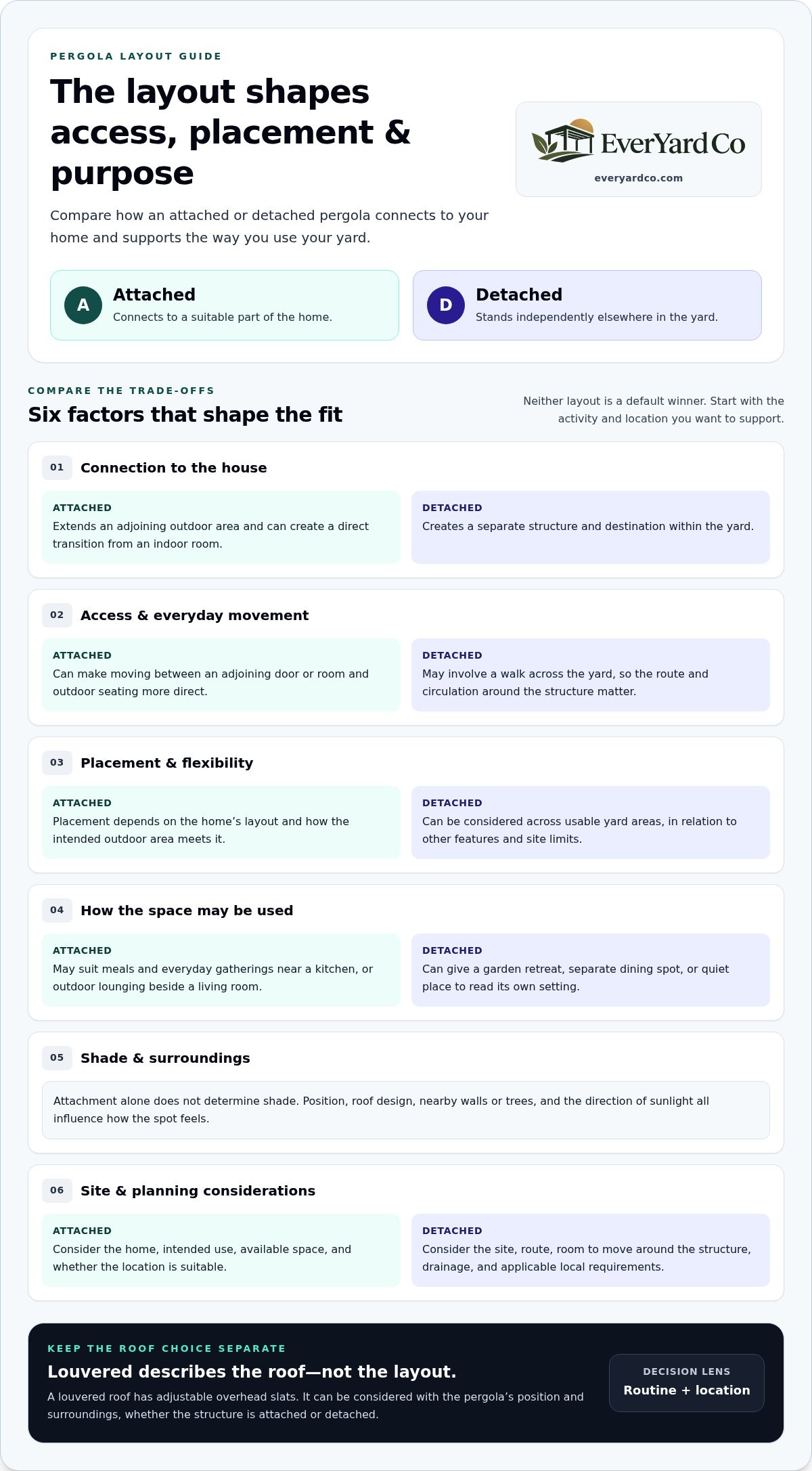
The defining difference is where the pergola sits in relation to the house. An attached pergola connects to a suitable part of the home, while a detached pergola stands independently elsewhere in the yard. Both can provide an open-air place to relax, but their positions affect how you reach the space, how it fits into daily routines, and which part of the yard it serves.
A pergola is an open structure formed by posts and an overhead framework, often used as a garden feature or an extension of a building. This overview of the pergola explains the basic form. Attachment is a separate choice from roof style: a louvered roof, for example, describes adjustable overhead slats, not whether the structure connects to the house.
What is an attached pergola?
An attached pergola creates a direct transition from an adjoining indoor room to an outdoor setting. Beside a kitchen door, it can make an easy spot for meals and everyday gatherings. Beside a living room, it can extend a lounging area outdoors. Start with the room and doorway you use most, then consider whether the nearby outdoor space can accommodate the pergola and furniture.
House and site conditions affect where an attached pergola makes sense. Consider the relationship between the home, intended use, and available space rather than assuming every exterior wall offers the same opportunity.
What is a detached pergola?
A detached pergola stands on its own, creating a separate destination beyond the patio or deck. Set apart from the house, it might frame a garden retreat for reading, a shaded dining spot, or a place to pause among planting beds. The separation can give an activity its own setting instead of extending an existing room.
Distance alone doesn’t make a location work. Consider the route to the pergola, the room needed to move around it, and how it relates to seating, garden areas, and other outdoor features.
The attached vs detached pergola choice is less about one layout being universally better and more about the role you want the structure to play. One can make the move between indoors and outdoors feel immediate; the other can give an underused part of the yard a clear purpose. Compare the location with the activity you want to support before settling on a layout.
How Attached and Detached Pergolas Shape Outdoor Living
A pergola’s position influences more than the view from the house. It can shape which route feels natural, where outdoor meals happen, and whether the garden becomes part of a daily routine or a separate place to visit. As you compare attached and detached pergolas, picture how people will move through the yard as well as where they’ll sit.
When does an attached pergola make everyday access easier?
A pergola beside a patio door or deck can make it easier to carry a meal outside, step out with a book, or move between indoor and outdoor seating. That close connection can make the space feel like part of the home’s everyday rhythm, especially when the adjoining room is already used for gathering.
Before choosing a location, consider the door people use, nearby windows, the intended furniture arrangement, and how the structure will relate to the exterior. These details help you judge whether the layout will work for your routine.
When does a detached pergola create a better outdoor destination?
A separate pergola can give a quiet corner, garden edge, or open section of lawn a distinct purpose. It might become a dining spot away from the house or a place to read apart from the main patio. Its position can create visual separation between yard zones, depending on the surrounding space and features.
Plan the approach as carefully as the seating. A route that’s awkward to walk or blocked by furniture can make a promising location less useful. Consider the path from the house, circulation around the structure, and how it connects to garden areas or other outdoor spaces.
Shade depends on more than attachment. The pergola’s position, roof design, and surroundings all influence how the space feels at different times. Nearby walls, trees, and the direction of sunlight can affect the shade a spot receives. A louvered roof adds another design consideration: Ever Yard Co.’s pergola listing describes an adjustable louvered roof, reinforced aluminum frame, and integrated drainage system. Those features describe the product, while roof style remains separate from whether the pergola is attached or detached.
Planning may also involve the site, the structure, drainage, and applicable local requirements. These considerations vary by setting, so compare the actual location rather than assuming one layout will always be simpler. Explore Ever Yard Co.’s best sellers to see a louvered pergola alongside other backyard structures.
Attached vs. Detached Pergola: Compare the Trade-Offs
The best layout depends on the relationship you want between the house, the pergola, and the rest of the yard. Use this comparison to identify which arrangement supports your plans, rather than treating either option as the default.
| Consideration | Attached pergola | Detached pergola |
|---|---|---|
| House connection | Connects to a suitable part of the home and can extend an adjoining outdoor area. | Stands independently, creating a distinct structure within the yard. |
| Placement | Position relates to the house and the outdoor space you want to use. | Placement may be considered across usable yard areas, in relation to other features. |
| Access | Can make the transition from an adjoining door or room more direct. | May involve a walk across the yard, so the route matters. |
| Flexibility | Depends on the home’s layout and how the intended area meets it. | Offers placement options away from the house, within the limits of the site. |
| Likely use | May suit a patio or deck used as an extension of indoor routines. | May suit a separate dining area, seating spot, or garden destination. |
Which pergola layout offers more placement flexibility?
A detached layout may allow more choice within a usable part of the yard, particularly if you want to define a space away from the home. An attached layout is more closely tied to the house and the position of the intended outdoor area. Neither is automatically easier to plan: paths, available space, the home’s arrangement, and the pergola’s purpose all shape what makes sense.
Does an attached pergola always provide better shade?
No. Attachment alone doesn’t determine shade or comfort. Orientation, roof design, nearby structures, and sun exposure all influence conditions in the space. A fixed roof and an adjustable louvered roof also offer different ways of managing overhead cover, regardless of whether the pergola stands alone or connects to the house.
Consider the actual seating or activity area throughout the day. Where does the sun fall during meals or afternoon reading? How might the house or nearby features affect that spot? These observations ground the choice in how you’ll use the space, rather than assumptions about one layout providing better shade.
There’s no universal winner in the attached vs detached pergola comparison. Each offers a different balance of connection, placement, and access. Once you know which layout fits your plans, explore backyard best sellers for a pergola and other structures to consider.
How to Choose Between an Attached and Detached Pergola
Your routine, available space, access, and desired connection between indoors and outdoors are the main factors in choosing an attached or detached pergola. Work through them in order, then compare each layout with how the yard functions.
- Define the activity. Decide what the pergola should make easier. Dining close to the kitchen may call for a different setting than reading in a quiet garden corner.
- Map the space. Sketch the house, doors, patio or deck, garden areas, and possible pergola locations. Add the furniture you expect to use to check whether the footprint feels workable.
- Assess access and circulation. Trace the route from the house and between outdoor areas. Allow for doors to open and people to move around seating without making everyday paths feel cramped.
- Compare the layouts. Decide whether a direct connection to the home supports your routine, or whether an independent position gives a separate yard area a clearer purpose.
Start with the routine, then map the yard
Picture an ordinary day, not just the finished arrangement. If meals will move from the kitchen to an outdoor table, note which entrance and route you’ll use. If the goal is a garden destination, mark where you’d like to sit and how you’ll get there. A simple sketch can show whether the pergola connects naturally to existing spaces or interrupts how people move through them.
Check the setting before choosing a configuration
Think about the planned footprint, the surface beneath it, nearby features, and access to the location. For an attached layout, include the house-side structure and other site-specific details in your assessment. Review applicable local requirements for the project, too, since they may vary with the site and structure.
Avoid choosing by appearance alone. A layout can look appealing on paper yet leave too little room for circulation or make the route to a seating area inconvenient. Also, don’t confuse roof style with placement: an adjustable or fixed roof describes the overhead design, not whether the pergola connects to the house. Keep those decisions distinct as you narrow your options.
Once you’ve mapped your routine and considered the setting, browse pergolas and backyard best sellers to explore structures for your plans.
Find a Pergola and Backyard Structure That Fits Your Plans
Once you’ve narrowed down where a pergola could sit, compare product details with the space and routine you have in mind. The Louvered Pergola 10 Ft X10 is one option in the collection. Its listed features include a 10 ft x 10 ft size, an adjustable louvered roof, a reinforced aluminum frame, and an integrated drainage system.
What to compare in the louvered pergola listing
Use the listed dimensions as a starting point, then measure the intended area. Account for the structure, nearby doors and furniture, and the path people will use to move through the space. A footprint that fits on paper should also work alongside the way you plan to use the yard.
The listing describes the roof, frame, and drainage system as product features. These details help you compare the structure with your plans, while attachment remains a separate placement decision. Keep your attached vs detached pergola choice grounded in the intended location and your yard’s layout.
Which other backyard structures serve different needs?
A pergola, playhouse, and greenhouse each give outdoor space a different purpose. The collection’s wooden playhouse listing describes a working door, windows, a bench, a service station, and a flower pot holder. These features make it a dedicated place for play and imaginative activity.
The walk-in greenhouse is a separate option for growing. Its listed 6 ft x 8 ft design includes an aluminum frame and polycarbonate panels. Its purpose differs from a pergola’s outdoor gathering space or a playhouse’s child-focused setting. Start by deciding which activity you want to make room for, then consider the area available to support it.
For a final comparison, revisit your measurements and intended use alongside the listed product details. Explore backyard best sellers to find a structure that fits the way you want to use your yard.
Make Your Yard Work for the Way You Live
The right pergola layout is the one that supports your outdoor routine. An attached setup can make a patio or deck feel closely connected to the home, while a detached pergola can give another part of the yard its own purpose. In the attached vs detached pergola decision, weigh daily activities, access, available space, and the route between outdoor areas before choosing a position.
Then match product details to the place you have in mind. The listed pergola pairs an adjustable louvered roof with a reinforced aluminum frame. The collection also includes a walk-in greenhouse for growing and a wooden playhouse with features for activity and imaginative play. Each can help shape a different kind of backyard space.
Ready to explore structures for your plans? Browse backyard best sellers and take the next step toward making an underused area more purposeful.
Frequently Asked Questions
What is the difference between an attached and a detached pergola?
An attached pergola connects to a suitable part of the home, while a detached pergola stands independently in the yard. The attached vs detached pergola distinction is mainly about placement and connection, not roof style. Either layout can create a useful outdoor setting. Choose by considering the home’s layout, available yard space, access routes, and the activities you want the area to support, such as dining, relaxing, or spending time in the garden.
Is an attached pergola better than a detached pergola?
Neither layout is automatically better; each suits different plans. An attached pergola may work well beside a room or patio you use often, making it easier to move between indoor and outdoor spaces. A detached pergola may suit a separate dining or seating area elsewhere in the yard. Compare your routines, available space, access, and site conditions before deciding, rather than choosing based on configuration alone.
Can a detached pergola be placed near a house?
Yes. A detached pergola can be positioned near a house while remaining independent. Consider how people will move between it and the home, whether doors and existing outdoor areas remain easy to use, and whether the location supports the activity you have in mind. Also assess the surface, nearby features, and project requirements. A thoughtful position should fit the yard’s flow, even if the pergola stands apart from the house.
Does an attached pergola provide more shade?
Not necessarily. Shade depends on the pergola’s position, orientation, roof design, sun exposure, and surroundings, not attachment alone. A location beside the home may be convenient, but that doesn’t guarantee more shade throughout the day. Think about where people will sit and when they’ll use the space. Then consider how the roof design and placement work together to create the setting you want.
Can a pergola be attached to any house?
No. A house or location isn’t automatically suitable for an attached pergola. The house-side structure and site-specific conditions can affect planning, so consider the intended position and relevant project requirements before choosing this configuration. If connecting to the home doesn’t fit your plans, compare a detached layout instead. Match the structure’s placement to the home, yard, and intended use rather than assuming one arrangement will work everywhere.
Should I choose an attached or detached pergola for a patio?
Choose based on how the patio connects to the home and how you plan to use it. An attached pergola may suit a patio that extends an adjoining indoor living space. A detached pergola may make sense if the seating or dining area is set apart elsewhere in the yard. Compare the paths people will take, the room available for furniture, shade needs, and site conditions to find a layout that feels natural.


