


Choosing a Backyard Greenhouse: 2026 Practical Guide
What if the best greenhouse for your yard isn’t the largest one you can fit, but the one that works with the way you garden? Learning how to choose a backyard greenhouse starts with your growing goals and routine. From there, consider the available space and the conditions your plants will face.
It’s easy to feel unsure about dimensions, layout, glazing, ventilation, and extra features. Each choice affects how comfortable the greenhouse is to use and how well it supports your plants. A thoughtful choice can turn an underused corner of the yard into a practical part of everyday outdoor living.
This guide walks through how to assess your site, compare structures, and account for ongoing care. You’ll consider how much growing space you need, how sunlight and weather affect placement, and which features suit your routine. By the end, you’ll have a clear set of priorities for choosing a greenhouse.
Key Takeaways
- Start with the plants you want to grow and the routine you can maintain, then use those priorities to guide your choice.
- Measure the full footprint, including room for doors, paths, and access around the structure.
- Assess sunlight, shade, drainage, nearby trees, and exposure before settling on a location.
- Compare glazing, frame materials, ventilation, and care needs in light of your growing conditions.
- Use a simple comparison to identify what your greenhouse needs to do and which extras are optional.
Choose a Greenhouse Based on What You Grow
Whether you’re choosing your first greenhouse or replacing one that no longer suits your garden, begin with the plants you want to grow. A backyard greenhouse provides a sheltered growing space, helping you manage conditions for particular gardening goals. For an overview of what a greenhouse is and how greenhouses are used, see Wikipedia.
Starting seeds, growing herbs, tending seasonal vegetables, raising flowers, and overwintering plants call for different arrangements. Seed trays need accessible shelves, while mature crops need room to spread. Overwintering potted plants need space that doesn’t block the path. Your intended use affects the footprint, interior height, access, and day-to-day care the greenhouse needs.
Which plants do you want to grow in a backyard greenhouse?
Separate short-term projects from plants you’ll tend for months. If your main goal is starting seeds, plan for trays, shelves, and a convenient work surface. If you’ll grow tomatoes, cucumbers, or other climbing crops, allow for vertical growth as well as the mature plants’ width. Herbs and flowers may suit containers or beds, depending on how you plan to care for them.
Write down the crops you’re most likely to grow in a typical season. A focused list helps you picture the space you’ll use instead of planning around every possibility. Let your growing goals determine the greenhouse’s size, height, and layout, rather than choosing a structure first and hoping it fits.
How often will you use and care for the greenhouse?
Plan around your actual routine, not an ideal one. Consider when you’ll check plants, water, and tend to seasonal tasks. Your answers can help you choose a setup that’s manageable and makes everyday care straightforward.
Shelving keeps seed trays and small pots organized, but takes up room. Paths make it easier to reach plants and carry supplies; a work surface can simplify potting, but also reduces growing space. Think through where you’ll water plants and how you’ll clean around them. Clear access may be more useful than filling every corner with shelves or pots.
How Backyard Greenhouse Size, Sunlight, and Placement Shape Your Choice
A greenhouse may fit your growing plans on paper but feel awkward in the yard if the site is poorly chosen. Before comparing structures, map the available space and observe how sunlight, water, and everyday movement affect it. Conditions vary from yard to yard, so assess the site during the seasons when you expect to use the greenhouse.
Where should you place a greenhouse in your yard?
Observe how sunlight moves across the proposed site and where buildings, fences, and trees cast shade. Consider whether nearby trees could drop leaves or branches onto the structure, or whether roots could affect the ground. The right amount of sun depends on your crops and seasonal conditions. For information on extending the growing season and managing a greenhouse, NC State University Extension offers guidance on greenhouse materials and features.
Look for stable, reasonably level ground with drainage that won’t leave water pooling around the structure. Check that the greenhouse is easy to reach from the house, garden, or water source, without blocking the routes you use to carry tools, plants, and supplies. Assess sunlight, shade, drainage, ground stability, nearby trees, seasonal exposure, and daily access before choosing a site.
What greenhouse dimensions should you compare?
Measure the available width and length, then mark the proposed footprint on the ground. Allow room for the door to open and for you to enter, carry supplies, and reach the outside of the structure. A greenhouse fitted tightly between boundaries may leave too little space for routine care. Also consider how you’ll move between it and other parts of the garden.
Floor area is only part of the decision. Compare interior height with your planned layout: shelves make use of vertical space, while hanging plants and climbing crops need room above and around them. Paths and work areas reduce the floor space available for pots or beds, so picture the interior in use rather than relying on the overall dimensions alone.
Make a quick sketch of the footprint, mark the door swing, then add paths, shelves, and growing areas. This gives you a practical starting point for how to choose a backyard greenhouse that fits your site and plans. As you refine the dimensions and placement, explore backyard greenhouse options from Ever Yard Co.
Which Greenhouse Materials and Features Suit Your Growing Conditions?
Materials affect how a greenhouse handles light, warmth, daily use, and exposure to the elements. No single combination suits every garden. When deciding how to choose a backyard greenhouse, weigh the structure against your plants, seasonal conditions, and willingness to maintain it. A material that works well in one yard may be less practical in another.
How do greenhouse glazing and frame materials differ?
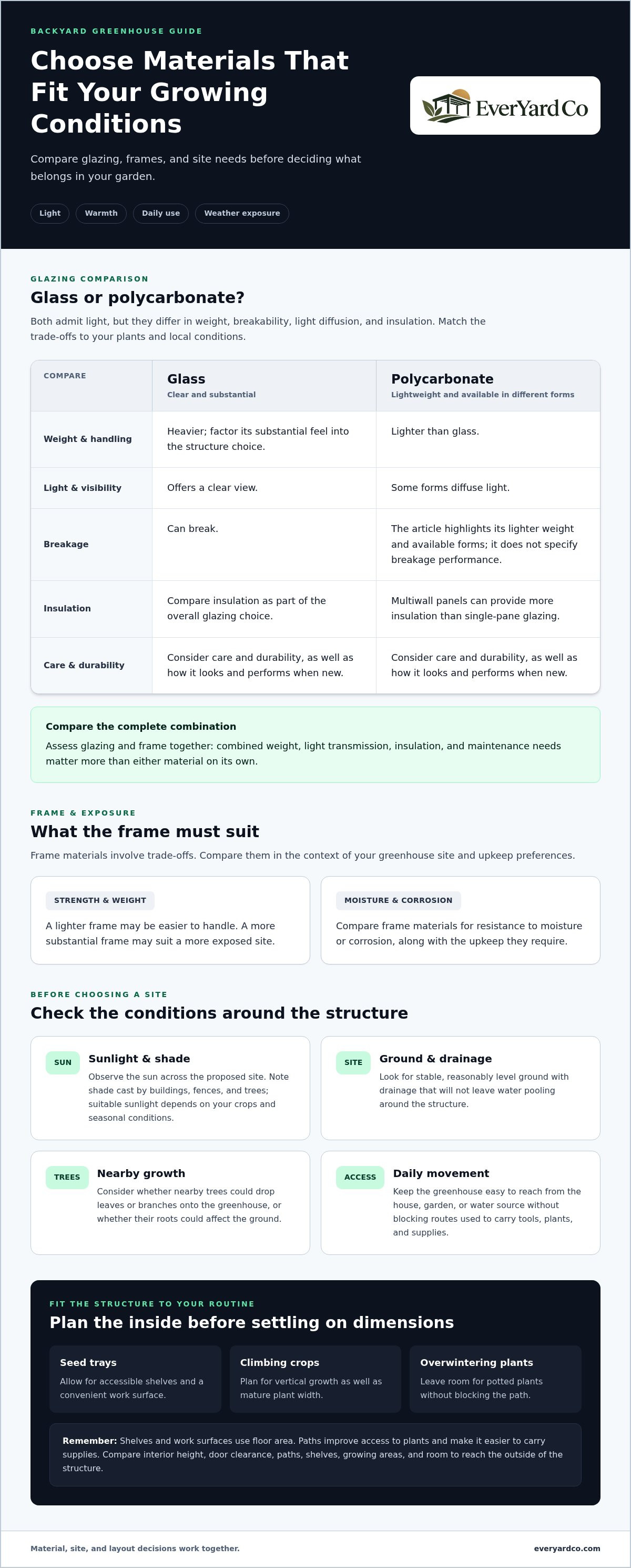
Glazing is the transparent or translucent covering that admits light. Glass offers a clear view and a substantial feel, but it’s heavier and can break. Polycarbonate is lighter and comes in forms that diffuse light; multiwall panels can also provide more insulation than single-pane glazing. Consider care and durability as well as how the material looks and performs when new.
Frames involve their own trade-offs. Compare materials for strength, weight, resistance to moisture or corrosion, and upkeep. A lighter frame may be easier to handle, while a more substantial one may suit a more exposed site. Assess glazing and frame together: their combined weight, light transmission, insulation, and maintenance needs matter more than either material on its own.
Why do ventilation and weather exposure matter?
Glazing and frame choice alone can’t determine whether a greenhouse suits your local conditions. Wind, temperature shifts, seasonal weather, and how the structure is secured all matter. Review the greenhouse’s anchoring guidance and consider whether the proposed location is exposed or sheltered.
Ventilation openings help release excess heat and move air around plants. Consider where doors and windows are positioned and whether you can reach and operate them as conditions change. Openings that work together can make it easier to air out the space; an awkward arrangement can make that task less convenient. Match ventilation to your crops and the time you can spend adjusting it.
Assess the site and structure together rather than treating any one glazing or frame material as universally best. Consider seasonal conditions, exposure, ventilation, and the greenhouse’s care requirements when narrowing your options.
How to Compare Backyard Greenhouses Without Overbuying
Start your comparison before browsing individual options. Write down what the greenhouse needs to do, what the site can accommodate, and how much time you expect to spend caring for it. This keeps appealing extras in perspective and helps you avoid a structure that takes more space or attention than your gardening routine allows.
A practical greenhouse shortlist comes down to fit, function, and upkeep. Compare options side by side using these criteria:
- Growing use: List the crops or tasks the greenhouse needs to support.
- Footprint: Compare the structure’s dimensions with the available space, including access around it.
- Height: Account for shelves, hanging plants, and crops that grow upward.
- Materials: Compare glazing and frame choices for light, insulation, durability, weight, and maintenance.
- Ventilation: Check whether the openings suit your plants and are practical to use.
- Care: Consider cleaning, watering access, and the time needed to maintain the space.
Which greenhouse features are essential for your plans?
Separate must-haves from conveniences. Practical access, ventilation suited to your growing conditions, and enough interior room for your layout are functional needs. Extra shelving or other organizational features are useful only if they support how you’ll use the greenhouse. Rule out any option that misses a non-negotiable, such as workable door access or enough height for your crops.
Include ease of cleaning in your comparison. A layout that’s difficult to reach around can make routine care more time-consuming. Choose a greenhouse that fits the space and time you have, rather than one that creates extra demands.
How can you balance current needs with future plans?
Consider changes you can reasonably picture, such as adding a few herbs or trying a climbing crop, alongside how often you expect to garden. Extra room for likely plans can be useful. Buying far more capacity than you can use or care for may leave valuable yard space underused.
Hypothetical example: A gardener who starts seeds and grows herbs might compare options based on tray space, reachable shelves, convenient access, and straightforward cleaning. If they expect to add a few seasonal crops, some extra growing room may help. Planning around a much larger garden they may never tend is less practical.
Use this framework to narrow your shortlist before making a purchase decision. For a functional addition to your yard, explore backyard greenhouse options from Ever Yard Co. and compare them with the needs you’ve identified.
What to Do Before Choosing a Backyard Greenhouse
A clear decision connects your growing plan to the realities of your yard and routine. Before choosing, note what you’ll grow, where the structure could sit, how you’ll reach it, and what everyday care will involve. These details give you a sound basis for comparing options instead of relying on appearance alone.
What should you check before making a greenhouse decision?
Confirm your likely crops, approximate footprint, door and working access, and the care routine you can maintain. Review the site’s sunlight, drainage, ventilation needs, and access to water. Decide where tools, pots, and supplies will go, and whether shelving or a work surface will leave enough room to move and clean comfortably.
Before placing a backyard structure, review the local rules that apply to your property. Requirements can vary, so check with the relevant building or planning office rather than assuming a particular rule applies. Keep your notes together, including site measurements and your shortlist, so you can compare each greenhouse against the same criteria.
How do you move from planning to choosing?
Compare each greenhouse on your shortlist with your growing goals and site notes. Does the footprint leave room for access? Does the layout support your crops, ventilation needs, and care habits? Will you have room for water access, storage, shelving, and cleaning? A good fit should be workable in an ordinary week, not just during an ideal gardening season.
Keep the process simple: define your growing plan, assess the site, record practical needs, and compare options against your notes. Ever Yard Co. offers backyard greenhouses as part of its outdoor living structures. Choose a greenhouse that makes your yard more useful and enjoyable while fitting the way you garden.
- Growing plan: List the plants and gardening tasks you expect to prioritize.
- Site check: Note the available footprint, access, light, drainage, and water source.
- Routine: Account for storage, shelving, watering, and cleaning.
- Comparison: Save your shortlist and rule out options that miss a must-have.
With those steps in place, you’ll have a more confident answer to how to choose a backyard greenhouse. Explore backyard greenhouses from Ever Yard Co.
Choose a Greenhouse That Fits Your Garden
Choosing a greenhouse gets easier when you begin with the way you want to garden. Your crops and care routine determine how much space you need, while sunlight, drainage, access, and seasonal exposure help you assess where the structure should go.
Keep your comparison practical. Look beyond floor area to usable height, materials, ventilation, and the room needed for watering, storage, shelving, and cleaning. Prioritize features that support your plans, then consider whether optional features are worth the space and care they require.
Ever Yard Co. offers backyard greenhouses alongside pergolas, playhouses, and sheds to help make yard space more functional and enjoyable. Explore backyard greenhouses from Ever Yard Co.
With your growing goals and site notes in hand, you can choose a greenhouse that fits your garden and the way you use it.
Frequently Asked Questions
Is a backyard greenhouse worth it for a beginner?
A backyard greenhouse can be a good fit for a beginner when it supports a clear growing goal and a routine you can maintain. Start with seed starting, herbs, or a small selection of seasonal plants rather than planning for every crop. Consider how much space, access, ventilation, and care those plants need. A useful first greenhouse is one you can use consistently as your gardening skills grow.
What should I consider first when choosing a backyard greenhouse?
Start with what you want to grow and how often you’ll tend it. Those choices shape the growing area, height, access, and layout you need. Next, assess the site for sunlight, drainage, exposure, and room to move around the structure. This helps you focus on practical needs before comparing materials or extras, and gives you a clear approach to how to choose a backyard greenhouse.
How do I choose the right size greenhouse for my backyard?
Measure the usable site, including room for the entrance, access around the structure, and any planned work area. Then consider how your plants will grow and how you’ll arrange them, rather than measuring only for seed trays or starter pots. Compare interior height as well as floor dimensions, especially if you plan to use shelves or grow climbing plants.
Which greenhouse material is best for a backyard?
No single greenhouse material is best for every garden. Compare glazing and frame options for light, insulation, weight, durability, and maintenance, then consider your growing plans and site conditions. Glass and polycarbonate, for example, have different practical trade-offs. Ventilation and weather exposure matter too, so assess the structure as a whole. The right choice depends on the conditions and care you can manage.
Does a backyard greenhouse need ventilation?
Yes, ventilation helps manage heat and move air around plants. Doors and vents provide openings, and their placement affects how easily you can air out the greenhouse as conditions change. Consider ventilation while comparing options, not as an afterthought. The right arrangement depends on the structure, the site, and what you plan to grow. Choose openings you can reach and use as part of your regular care routine.
Can a greenhouse handle the weather where I live?
A greenhouse’s suitability depends on its construction, placement, exposure, and the conditions it will face. Consider wind, precipitation, seasonal temperature changes, and nearby trees as you assess the site and structure. Review the manufacturer’s guidance for relevant use and care information, and check applicable local requirements before placing the greenhouse. Don’t assume one material or design suits every setting. Match the structure to the conditions at your site.
How much space should I leave around a backyard greenhouse?
Leave enough space to open doors fully, reach the structure for routine care, and move tools or supplies safely. There’s no single clearance that suits every yard, so measure the proposed location and account for the greenhouse’s layout. Include paths, drainage, and nearby plants or structures in your plan. Planning for access before comparing dimensions helps you choose a greenhouse that fits the yard and remains practical to use.


