


Greenhouse for Home Gardening: A Thoughtful Buying Guide
The best greenhouse for home gardening is the one that fits the plants you want to grow, the space you have, and the care you can sustain. When comparing options, it’s easy to focus on size or extra features before considering how you’ll use the structure. Start with your growing goals and daily routine, then assess which features support them.
This guide covers practical ways to compare a greenhouse, including site conditions, light, ventilation, access, and materials. You’ll also find a checklist to help you turn your plans into clear priorities. Start with the garden you want to tend, then choose a greenhouse that serves it.
Key Takeaways
- Begin your greenhouse shortlist with the plants you hope to grow and the care you can sustain.
- Consider how light, airflow, temperature, and moisture relate to the needs of your chosen plants.
- Compare access, ventilation, glazing, and frame details by the gardening tasks they support.
- Use a simple checklist to capture your planting plans, visit frequency, access needs, and site observations.
- Choose a greenhouse for home gardening that makes your yard more useful and supports a routine you’ll enjoy keeping.
A greenhouse for home gardening should fit the way you grow
Choose a greenhouse around the plants you intend to grow, the space available, and the routine you can maintain. It creates a dedicated place to tend plants and manage their growing conditions. You might use it for a focused task, such as starting seedlings, or as part of a regular routine of watering, tending, and harvesting.
If you garden casually outdoors for part of the year, a dedicated structure may not add much to your routine. If you regularly start plants, care for tender varieties, or want to keep crops going beyond their usual outdoor window, a greenhouse can give those activities a more settled place. The right choice depends on your goals, not the number of features a structure offers. For a general overview of greenhouse types and uses, see Greenhouse.
Let your planned plants and the care you can consistently give them lead your greenhouse decision. This keeps the search focused on everyday use instead of an impressive-sounding feature list.
Start with what you want to grow
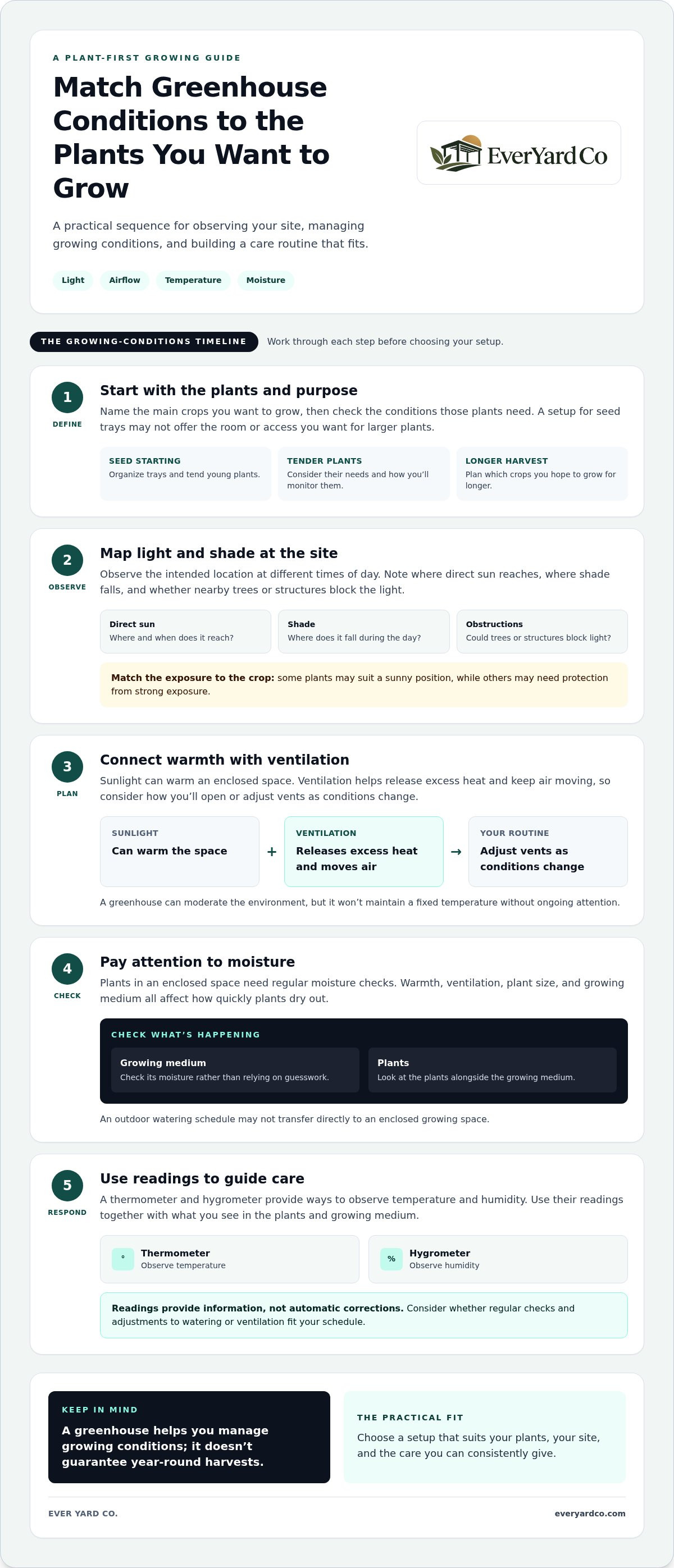
Different goals call for different growing arrangements. Name your main crops before comparing greenhouse features, and consider which purpose matters most:
- Seed starting: A dedicated place for seedlings helps organize trays and makes young plants easier to tend.
- Tender plants: Consider the conditions your chosen plants need and how you’ll monitor and care for them.
- Extending the harvest: Decide which crops you hope to grow for longer, while recognizing that results depend on plant needs and the conditions you can manage.
These goals can overlap, but they aren’t interchangeable. A setup that works for seed trays may not provide the access or room you want for larger plants. A structure intended for a few tender plants may not suit a broader growing plan. Write down your primary crops and purpose first. Add secondary goals only if they fit the space and routine you have.
Picture the greenhouse in your daily routine
Imagine tending plants on an ordinary day. When will you water, inspect leaves, prune, and harvest? Will you make brief visits between other tasks or set aside time for longer care? Your answers help define convenient access. Plan a layout where you can reach plants and carry supplies without repeatedly moving pots out of the way.
Consider how the greenhouse will fit into your yard and the paths you already use. A location that’s easy to approach can make regular attention more natural. For a wider look at planning and choosing a structure, the article Choosing a Backyard Greenhouse: 2026 Practical Guide offers a useful companion to this plant-first approach. Your growing priorities and daily habits create a clearer brief for comparing practical features.
Match greenhouse conditions to the plants you want to grow
A greenhouse gives you a more manageable growing environment, but its value depends on how well that environment suits your plants. Light, airflow, temperature, and moisture all affect growing conditions. Their importance varies by crop, so check what your plants need before assuming one structure or setup will suit every purpose.
A greenhouse helps you manage growing conditions; it doesn’t guarantee year-round harvests. Plants still need attentive care, and conditions can shift with the weather, the site, and your daily habits. The University of Florida’s Greenhouse Design Considerations offers further background on how design choices relate to crop needs.
Plan around light, temperature, and ventilation
Start by observing light at the intended location at different times of day. Note where direct sun reaches, where shade falls, and whether nearby trees or structures block light. This helps you assess how the site aligns with your plants’ needs. Some crops may suit a sunny position, while others may need protection from strong exposure, so use plant preferences to guide your assessment.
Temperature and airflow are closely connected. Sunlight can warm an enclosed space, while ventilation helps release excess heat and keep air moving. Consider how you’ll open or adjust vents as conditions change, and whether that task fits your routine. A greenhouse can moderate the environment, but it won’t maintain a fixed temperature without ongoing attention. Observe the site across the day rather than relying on a single glance.
Think through watering and humidity
Plants in an enclosed growing space need regular moisture checks. Warmth, ventilation, plant size, and growing medium all affect how quickly plants dry out, so an outdoor watering schedule may not transfer directly. Since too much or too little water can cause problems, check the growing medium and plants instead of relying on guesswork.
A thermometer and hygrometer provide ways to observe temperature and humidity. Use their readings alongside what you see in the plants and growing medium. These tools provide information, not automatic corrections. Before choosing a greenhouse for home gardening, consider whether you can check conditions regularly and respond by adjusting watering or ventilation.
- Note the site’s sun and shade at different times.
- Identify how you’ll manage ventilation as conditions change.
- Consider whether frequent moisture checks fit your schedule.
These habits turn a greenhouse from a sheltered space into a growing environment you actively manage. If your plants and routine point toward adding one, explore Ever Yard Co.’s greenhouse offering as you consider how to make your garden more functional.
Compare greenhouse features by the gardening work they support
A useful feature makes planting or care easier for your chosen crops. Compare access, ventilation, glazing, and frame options against the work you expect to do instead of treating any material or feature as a universal best. A greenhouse for home gardening should suit both your plants and the way you’ll tend them.
Use the table as a starting point. Identify your priorities, then weigh the trade-offs against your yard and routine.
| Feature | Gardening task it supports | What to consider |
|---|---|---|
| Access | Watering, pruning, moving trays, and harvesting | Consider how easily you can enter, reach plants, and carry items through the opening. |
| Ventilation | Managing heat and maintaining airflow | Think about how you’ll open or adjust vents during routine care. |
| Glazing | Providing the enclosed growing space for your plants | Compare glass and polycarbonate in relation to your use, upkeep, and setting. |
| Frame | Supporting the greenhouse structure | Consider how the frame suits the intended placement and the care you can give it. |
Prioritize access and ventilation for regular care
If you expect to visit the greenhouse often, convenient entry matters. You may carry watering supplies, reach plants along the sides, or move trays in and out. Picture these tasks before choosing. An opening that suits your everyday movements can make regular care more manageable. Weigh that convenience against features you’re less likely to use.
Ventilation also needs to fit your routine. Openings let air move and can help manage heat, but you need to adjust them as conditions change. The USDA Natural Resources Conservation Service’s High Tunnel Initiative describes growing-season benefits associated with high tunnels, a type of greenhouse structure. Treat that as context, not a promise that a particular greenhouse will produce a fixed result.
Choose glazing and frame considerations with purpose
Glass and polycarbonate are options to compare, not automatic answers. Consider what you intend to grow, the upkeep you’re prepared for, and how the greenhouse will sit in its setting. Give the frame similar thought: assess the structure as a whole and how it supports your intended use. For a deeper materials comparison, consult Greenhouse Materials Comparison: Glass, Polycarbonate, and Frame Options.
Once you’ve identified the features that support your gardening work, browse Ever Yard Co.’s greenhouse offering as you consider a purposeful addition to your garden.
Use this greenhouse for home gardening checklist before choosing
A short written brief turns a broad search into a manageable comparison. It keeps your attention on the greenhouse that supports your growing plans, rather than on features that sound appealing but don’t serve your routine. Record the essentials, then use the same checklist to assess each option.
Turn gardening goals into non-negotiables
Name your main growing purpose and the plants it needs to serve. Separate the conditions and everyday features you rely on from preferences that would simply be nice to have. A brief list makes it easier to compare choices consistently and set aside details that don’t address your priorities.
- 1. Name your purpose. Note whether you’re starting seeds, tending particular plants, or pursuing another clear growing goal.
- 2. List your intended plants. Write down the crops or varieties you expect to grow first. Keep secondary interests separate so they don’t blur the main purpose.
- 3. Set your essentials. Identify the features you need for regular planting and care, such as easy entry or a way to manage ventilation. Mark optional preferences separately.
- 4. Describe your care routine. Record how often you expect to visit and what those visits involve, including watering, inspecting, pruning, and harvesting.
- 5. Note access needs. Consider how you’ll carry supplies or move plants in and out, and whether you need clear room to tend them comfortably.
- 6. Observe the site. Write down where sunlight and shade fall, how you reach the location, and what features of the surrounding yard may affect everyday use.
- 7. Check your shortlist. Compare each greenhouse with your written essentials. Set aside an option if it doesn’t support your main growing purpose or would make your routine harder to maintain.
Check the intended site and ongoing routine
Observe the intended spot and the route you’d take to reach it. Notice changes in light, access, and activity around the yard rather than relying on a quick impression. Then consider the care beyond watering: ventilation, cleaning, and seasonal adjustments also take time. Be realistic about what you can maintain through the year.
Keep this stage focused on fit, then use Greenhouse Size for Your Backyard: Find the Right Fit for a dedicated look at dimensions and placement. Your site observations and routine notes give that planning a practical foundation.
With your priorities in writing, browse Ever Yard Co.’s greenhouse offering and compare it with the needs you’ve identified. A considered shortlist helps you move from possibility to a greenhouse with a clear purpose in your garden.
Bring your home gardening plans into a greenhouse that fits
A considered choice brings several practical decisions together: what you want to grow, the conditions those plants need, which features support your care habits, and how much time you can give the space. A greenhouse for home gardening should make your plans feel more achievable, not add complexity for its own sake. Your shortlist is useful because it reflects the garden you intend to tend.
What a suitable greenhouse should make easier
A suitable structure supports the gardening work you already plan to do. If you’ll visit often, entry and day-to-day access may matter most. If you’re focusing on particular crops, prioritize the conditions you can manage and the features that help you tend them. Your own requirements are the measure. You don’t need to choose an option simply because it offers more features.
A greenhouse gives regular gardening tasks a dedicated place. With a setup that fits your plants and habits, watering, checking growth, and harvesting can become part of a more intentional routine. The structure won’t replace care, but it can give that care a clear setting in the yard.
Explore greenhouse options for your garden
Before browsing, return to your notes. Keep your primary growing purpose at the top, followed by your essential features, access needs, and observations about the intended site. Compare each option against those priorities to distinguish a practical fit from a preference that doesn’t support your plans.
- Purpose: Does it align with the plants you expect to grow?
- Routine: Can you picture carrying out regular care in the space?
- Conditions: Do the features relate to the environment you can manage?
- Setting: Does it make sense for the place you’ve observed in your yard?
When an option meets your essentials, picture an ordinary day in the garden: bringing plants inside, tending them, and leaving the space ready for your next visit. This can help you see whether the greenhouse supports a routine you’ll want to keep. It also brings the decision back to its purpose: making a part of your yard more functional for everyday life.
Ever Yard Co. offers greenhouses for gardeners ready to move from planning to choosing. Use your shortlist to explore the selection and consider how a greenhouse could take its place in your garden. Explore Ever Yard Co.’s greenhouses.
Make room for the garden you want to grow
The right greenhouse is more than a structure in the yard. It gives your gardening plans a place to take shape, with space arranged around the plants and care that matter to you. A greenhouse for home gardening can turn an underused corner into a purposeful part of everyday life when its role is clear from the beginning.
Ever Yard Co. focuses on making underused yard space more functional, with greenhouses at the heart of its offering. Keep your priorities close as you browse and picture how a greenhouse could fit into the garden you have and the routine you want to build. Let that sense of purpose guide your choice.
Explore greenhouses for your garden and find a considered starting point for your growing plans.
Frequently Asked Questions
Is a greenhouse worth it for home gardening?
A greenhouse can be worthwhile if you’ll use it to support a clear growing goal. Consider whether it would give seedlings, herbs, or other plants a useful protected space and whether tending them fits your schedule. Its value isn’t only about how much you grow. A greenhouse for home gardening can also make a corner of the yard more useful, provided the structure supports habits you expect to keep.
Can you grow vegetables year-round in a home greenhouse?
Sometimes, but a home greenhouse doesn’t guarantee vegetables in every season. Results depend on the crops you choose and whether you can provide suitable light and temperatures as outdoor conditions change. Cool-season crops, such as leafy greens, may suit one part of the year, while warm-season vegetables have different needs. Plan around crops and conditions you can manage rather than assuming the structure alone will sustain harvests year-round.
What can a beginner grow in a greenhouse?
Beginners can start with a small selection of familiar crops, such as lettuce, radishes, or herbs, chosen for the season and conditions they can provide. Growing one or two types first makes it easier to notice how quickly containers dry, how plants respond to light, and when they’re ready to harvest. Check each crop’s specific needs, since even easy-to-grow plants can struggle if their basic conditions don’t suit the space.
How do you keep a greenhouse from getting too hot?
Use ventilation to release trapped heat by opening available vents or doors as conditions warm. On especially bright days, shade cloth can reduce direct sun, though the right amount of shade depends on the plants inside. A thermometer helps you notice temperature changes before plants show stress. Make adjustments gradually and observe the response. Avoid leaving a closed greenhouse in strong sun without checking its interior conditions.
Does a home greenhouse need ventilation?
Yes, ventilation helps exchange stale, humid air for moving air and can help manage heat. Without enough airflow, moisture may linger on leaves and surfaces, creating conditions that encourage plant problems. Vent openings or doors provide ways to move air through the space, but the amount needed varies with weather, plants, and greenhouse conditions. Check plants regularly and adjust ventilation as the environment changes.
How often should you water plants in a greenhouse?
There’s no reliable fixed schedule. Check the growing medium and each plant’s needs before watering. Containers can dry at different rates depending on their size, the plant, and conditions inside the greenhouse. Feel the soil rather than watering automatically, and water thoroughly when appropriate for that crop. Make sure excess water can drain away, since roots sitting in water may be harmed.


