


Greenhouse Materials Comparison: Glass, Polycarbonate, and Frame Options
The clearest greenhouse isn’t automatically the best fit for your garden. In this greenhouse materials comparison, the right choice depends on how glazing and frame materials work together. They shape the light your plants receive, how much warmth the space holds, and the care it requires. Glass offers a crisp view, while polycarbonate panels may diffuse light and provide different insulation depending on their construction. Each creates a different experience for everyday growing.
It’s natural to focus on the panels first, but durability, upkeep, and your gardening routine matter just as much. A greenhouse should suit the plants you tend, the weather it will face, and the time you want to spend maintaining it.
This guide compares glass and polycarbonate alongside common frame materials, with practical trade-offs in light, insulation, durability, and maintenance. Use the comparisons to identify what matters most, then review the construction details of the greenhouse you’re considering.
Key Takeaways
- A greenhouse materials comparison is more useful when it considers glazing and frame together, not as separate decisions.
- Compare glass, polycarbonate, and film against the same criteria to see which trade-offs fit your growing plans.
- Aluminum, galvanized steel, and wood each bring different structural, care, and visual considerations.
- Start with what you plan to grow, then weigh material upkeep against the routine you want your greenhouse to support.
Greenhouse Materials Comparison: What Actually Needs Comparing?
A greenhouse is a coordinated structure, not simply a choice between clear panels. Its materials fall into two connected groups: the glazing that encloses the growing space and the frame that supports it. Each affects how the greenhouse looks and functions, so a useful greenhouse materials comparison considers the whole structure and the way you plan to garden.
Glazing is the covering that admits light and separates the greenhouse interior from the outdoors; the frame supports the glazing and gives the greenhouse its form. Glass, polycarbonate, and film create different growing environments. Aluminum, galvanized steel, and wood bring different structural and visual qualities. A broad overview of greenhouse construction materials offers useful context, but the right combination depends on the purpose of your space.
Glazing and frame materials do different jobs
Glazing influences the quality of light, the view through the walls, and how enclosed the interior feels. Some coverings provide a clearer view; others soften or diffuse incoming light. The frame carries the covering and forms the greenhouse’s structure. Comparing only the panels can overlook how the frame affects appearance, care, and the experience of using the space. Treat glazing and frame as a pair: the covering has to suit the structure that supports it.
Which comparison criteria matter to home gardeners?
Begin with light. List the plants you plan to grow and consider whether they need clear, direct light or may benefit from more diffused light. A greenhouse for starting seedlings may call for a different balance than one used for seasonal crops. Assess insulation separately, especially if you plan to use the greenhouse during cooler parts of the year.
Next, compare upkeep. Consider how the surface is cleaned, whether the material suits the conditions it will face, and what routine care the frame may require. Appearance matters too: the structure should feel at home in your backyard while supporting your everyday gardening.
Look for comparable specifications rather than broad promises. A stated light-transmission figure or insulation rating is more useful than an unqualified claim that a material is “bright” or “energy-saving,” provided you’re comparing the same type and thickness. Check how the panels are constructed, not just their material name. No single option is best for every gardener; the right combination balances your plants, climate, maintenance preferences, and desired atmosphere.
Greenhouse Glazing Comparison: Glass, Polycarbonate, and Film
Glazing shapes the light inside a greenhouse, but clarity isn’t the only measure of a good fit. A useful greenhouse materials comparison also considers insulation, handling, cleaning, and how the covering suits your gardening plans. Use the table as a starting point. Actual performance depends on the material’s construction and thickness, along with how it’s installed.
| Glazing | Light | Insulation | Handling | Upkeep | Typical application |
|---|---|---|---|---|---|
| Glass | Clear view; light transmission varies by type. | Depends on single- or double-pane construction. | Rigid and heavier; breakage is a consideration. | Clean the surface and attend to damaged panes. | Greenhouses where a clear, traditional appearance is valued. |
| Polycarbonate | May transmit or diffuse light, depending on panel design. | Varies with panel construction and thickness. | Rigid panels; handling depends on panel format. | Keep panels clean and follow appropriate care practices. | Greenhouses where diffused light or a panel covering suits the plan. |
| Polyethylene film | Light passes through the flexible covering; transmission varies. | Depends on the film and structure. | Lightweight and flexible compared with rigid glazing. | Inspect the covering and plan for upkeep or replacement as needed. | Often used on hoop-style structures and other designs suited to film. |
Glass versus polycarbonate for backyard greenhouses
Glass offers a crisp, clear view and a familiar greenhouse character. Its weight and potential to break make support and careful handling part of the decision. Polycarbonate is a category of panels, not one uniform material: construction and thickness influence how a panel transmits or diffuses light and how it insulates. For a closer overview of the trade-offs, see Oklahoma State University Extension’s Greenhouse Structures and Coverings. Compare the same types and thicknesses rather than assuming every glass or polycarbonate option performs alike.
Where polyethylene film fits in a material comparison
Film is a flexible covering commonly associated with hoop-style greenhouses. Its light weight and replaceability can suit a simpler structure or a growing plan that doesn’t call for rigid panels. In return, it may require more frequent inspection and upkeep. Consider the greenhouse design, intended use, and how much maintenance you’re comfortable adding to your routine.
Glazing balances light, protection, and maintenance. The best choice supports the plants you want to grow and fits the level of care you’re prepared to provide. As you consider how those priorities translate into a backyard space, explore greenhouse options for your garden.
Greenhouse Frame Materials: Aluminum, Steel, and Wood Compared
The frame is more than a border around the glazing. It supports the covering and shapes the greenhouse’s structure, appearance, and ongoing care. In a greenhouse materials comparison, consider the frame material alongside its design: member size, spacing, joints, and connections all influence how the structure performs. General material traits are useful, but they don’t replace the specifications of a particular greenhouse.
| Frame material | Structural character | Care considerations | Appearance and use |
|---|---|---|---|
| Aluminum | Lightweight; strength depends on the design and member dimensions. | Consider the finish, connections, and exposure as part of routine inspection. | A clean, understated look suited to a range of backyard settings. |
| Galvanized steel | A steel frame protected by a zinc coating; design and connections still matter. | Coating condition, joints, and exposure affect corrosion protection over time. | A practical choice where a more substantial frame is desired. |
| Wood | Structural performance depends on the wood, member dimensions, and frame design. | Moisture exposure and regular care influence outdoor condition. | A natural appearance that can blend comfortably with a garden setting. |
Aluminum and galvanized steel frames
Aluminum offers a lightweight frame option, but “lightweight” alone doesn’t show how strong or suitable a frame is. That depends on its shape, dimensions, spacing, and connections. Galvanized steel is steel with a zinc coating intended to protect it against corrosion. The coating’s condition, joints, and exposure still matter. Look at how the frame is assembled, not just the material name.
Wood frames and the role of routine care
Wood brings warmth and visible natural texture to a greenhouse, making it an appealing fit in a cultivated backyard. Outdoors, moisture exposure and maintenance affect its condition. Care requirements depend on the wood and the structure, so don’t assume every wood frame needs the same treatment. Consider whether its appearance is worth the attention you’re prepared to give it.
No frame material is a universal winner. Balance the look you want with your willingness to maintain it and the structure needed for the glazing. Connections between frame members and the way glazing is supported are part of the same system. Compare the greenhouse’s specifications rather than treating broad material descriptions as guarantees of strength or longevity.
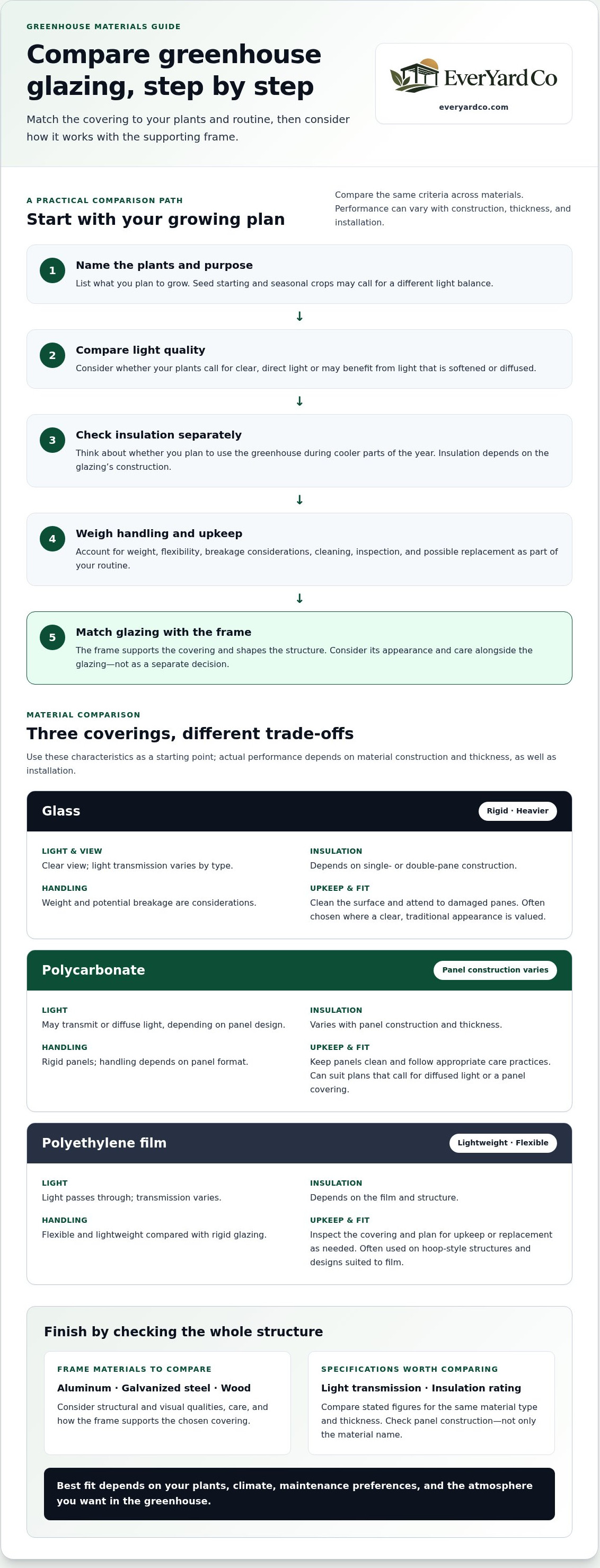
How to Choose Greenhouse Materials for Your Gardening Routine
Start with the work you want the greenhouse to do. A space for starting seedlings may need a different balance of light and shelter than one used mainly for seasonal growing. Keep the decision practical: define your growing goals, compare glazing, compare frames, then consider the care each combination requires.
Match materials to plants, light, and growing habits
Write down what you plan to grow and when you expect to use the greenhouse. Consider the light those plants need, then decide whether you prefer a clear view or more diffused light. Compare the stated light and insulation properties of specific glazing options, remembering that those characteristics vary with panel construction and thickness.
Your routine matters, too. Think about how often you’ll enter the greenhouse to tend plants and clean the covering. Include frame care in the same plan. The right choice should support your regular tasks without adding upkeep you’d rather avoid.
- Seed starting: Prioritize the light conditions your seedlings need and consider how much insulation matters for your planned growing season.
- Seasonal growing: Match the glazing and frame to the months you intend to garden, along with the care you’re willing to provide.
- A preferred garden environment: Balance the light quality you want with the structure’s appearance and your comfort with routine maintenance.
Balance appearance, upkeep, and long-term expectations
Glass can offer a clear, traditional look; polycarbonate panels and film bring different visual and practical considerations. Pair the covering with a frame that feels at home in your garden, while keeping structural design and care needs in view. Products made from the same material can perform differently. Construction, dimensions, connections, and installation details all influence the finished structure.
A simple decision matrix can make priorities visible:
- Growing goal: What plants and seasons should the greenhouse support?
- Glazing: Which light quality and insulation characteristics suit that goal?
- Frame: Which material and design fit the structure and setting?
- Routine: What cleaning, inspection, and care are you prepared to take on?
Keep size, placement, and exposure to weather in the picture, too. They shape how the greenhouse fits your backyard, but they’re separate planning questions from the material comparison. Use this framework to compare materials against your priorities, then explore greenhouses for your backyard.
Bring Your Greenhouse Materials Comparison to a Confident Choice
A considered greenhouse materials comparison doesn’t end with choosing a panel or frame in isolation. The goal is a structure that supports the plants you want to grow and feels manageable in your everyday routine. Glazing and framing work together, and the best fit depends on your priorities, not a universal ranking of materials.
A final greenhouse materials checklist
Before settling on a direction, use this checklist to bring the decision back to practical use:
- Growing plans: Identify the plants you want to tend and the seasons you expect to use the greenhouse.
- Glazing: Compare light quality, insulation, cleaning, and handling across the specific covering options you’re considering.
- Frame: Consider material, design, connections, appearance, and routine care as parts of the same structure.
- Product details: Review construction, thickness, and other relevant specifications before drawing conclusions about performance.
- Daily routine: Decide how often you’ll use the space and what level of inspection and upkeep suits you.
Comparing options against the same criteria makes trade-offs easier to see. General material descriptions can guide your research, but product-specific details show how a particular greenhouse is constructed.
Turn material knowledge into a useful backyard space
Picture an ordinary gardening day: you enter to check seedlings, water plants, or tend seasonal crops. The materials you choose should support those habits while fitting the look and feel of your backyard. A clear covering and a natural-looking frame may create one atmosphere; a different combination may better suit your preferences for light, care, and visual simplicity.
That’s the value of considering the whole greenhouse. A thoughtful combination can make the space feel purposeful and inviting, and suit the way you garden. Ever Yard Co. offers greenhouses to help turn those priorities into a practical backyard addition.
Explore greenhouse options from Ever Yard Co.
Shape a Greenhouse Around the Way You Garden
The right greenhouse isn’t defined by glazing alone. A thoughtful greenhouse materials comparison weighs light, insulation, frame design, appearance, and upkeep as parts of one structure. Glass, polycarbonate, and film each offer different trade-offs, while aluminum, galvanized steel, and wood bring their own considerations for care and character.
Let your plants, growing seasons, and everyday routine guide the decision. Then review the construction details of the greenhouse you’re considering, since materials can vary in how they’re made and assembled. The result should feel at home in your backyard and support the kind of gardening you want to do.
Ready to explore a greenhouse for your garden? Explore greenhouse options from Ever Yard Co.
Frequently Asked Questions
Which greenhouse glazing material is best?
The best glazing material depends on your plants, gardening routine, and priorities. Compare glass, polycarbonate, and polyethylene film for light, insulation, handling, and upkeep rather than expecting one option to suit every greenhouse. Construction matters: panels within the same material category can differ. Consider how you’ll use the space and what care you’re comfortable taking on before choosing.
Is glass or polycarbonate better for a greenhouse?
Neither is universally better; the right choice depends on your needs and the greenhouse’s construction. Glass offers a clear, traditional appearance, while polycarbonate panels vary in construction and can differ in light transmission and insulation. Consider the plants you’ll grow, the structure’s design, panel handling, and maintenance preferences. Review specifications for the actual greenhouse rather than relying on broad claims about either material.
Can a greenhouse use both glass and polycarbonate?
A greenhouse can use different glazing materials only if its design accommodates them. Panels must fit the frame and suit the structure’s construction, so don’t assume glass and polycarbonate can be mixed on any greenhouse. Review the product details and consider whether the combination offers suitable light, protection, and upkeep for your plants and gardening routine.
What is the difference between greenhouse glazing and frame materials?
Glazing is the covering that admits light and separates the growing area from the outdoors. The frame supports that covering and forms the greenhouse structure. Glass, polycarbonate, and polyethylene film are common glazing options; aluminum, galvanized steel, and wood are common frame materials. They perform different roles, but both influence the greenhouse’s appearance, care requirements, and suitability for the way you plan to garden.
Is polyethylene film suitable for a backyard greenhouse?
Polyethylene film can suit a backyard greenhouse designed for a flexible covering. Its suitability depends on the structure, your growing plans, and the level of upkeep you’re willing to manage. Compare film with rigid glazing for handling, inspection, and everyday use. A covering that works well for one greenhouse design or gardening routine may not fit another.
Which greenhouse frame material requires the least maintenance?
No frame material is guaranteed to require the least maintenance in every setting. Care depends on the specific material, finish, connections, construction, and exposure to moisture and other outdoor conditions. Aluminum, galvanized steel, and wood each have different considerations. Review the care guidance for the greenhouse you’re considering, then weigh that routine against the appearance and structural qualities you want.
How do I choose greenhouse materials for the plants I want to grow?
Start by listing the plants you plan to grow and the seasons you want to use the greenhouse. Consider their light needs and the environment you hope to create. Then compare glazing for light and insulation, and frames for structure, appearance, and care. Product-specific construction details can help you choose materials that suit both your plants and your everyday gardening routine.


