


Greenhouse Size for Your Backyard: Find the Right Fit
The best greenhouse for your backyard isn’t necessarily the largest one that fits. Choosing a greenhouse size for backyard gardening means balancing growing space with room to move, work, and enjoy the rest of your yard. The right fit depends less on a plant-count promise than on how you plan to use the interior.
Start with what you want to grow, then account for the routines that go with it: carrying pots, tending plants, reaching shelves, and moving between beds. The greenhouse should also leave clear access around it and preserve the paths you use through the yard.
This guide explains how to estimate a useful footprint, plan interior paths and shelving, and account for future needs. You’ll learn what to measure before browsing greenhouse options, from the potential site to the routes you use every day. With those details in hand, you can explore Ever Yard Co.’s greenhouses and choose with a clearer picture of what will work in your backyard.
Key Takeaways
- Choose a greenhouse size for backyard gardening by starting with what you plan to grow and how you’ll use the space.
- Look beyond the outside footprint: paths, shelving, and room to tend plants all affect usable growing area.
- Compare compact, mid-size, and larger layouts by their circulation and daily-use trade-offs, not dimensions alone.
- Map the site before browsing options, including the door swing, access paths, maintenance space, and nearby structures.
- Plan for realistic future routines so your greenhouse can support changing needs without taking over the yard.
What Greenhouse Size for a Backyard Really Means
A greenhouse’s listed dimensions describe its outside footprint, not the growing room you’ll have inside. The footprint is the ground area occupied by the structure; usable interior space is what remains for plants, paths, and everyday work. Both matter when choosing a greenhouse size for backyard gardening.
A greenhouse creates a protected growing environment, as described in this overview of what a greenhouse is. Its practical capacity, however, depends on the interior layout. Framing, benches, and shelving affect where plants fit and how easily you can reach them. A floor may look spacious on paper but leave little room for beds or containers once you add a working path.
Footprint versus usable growing area
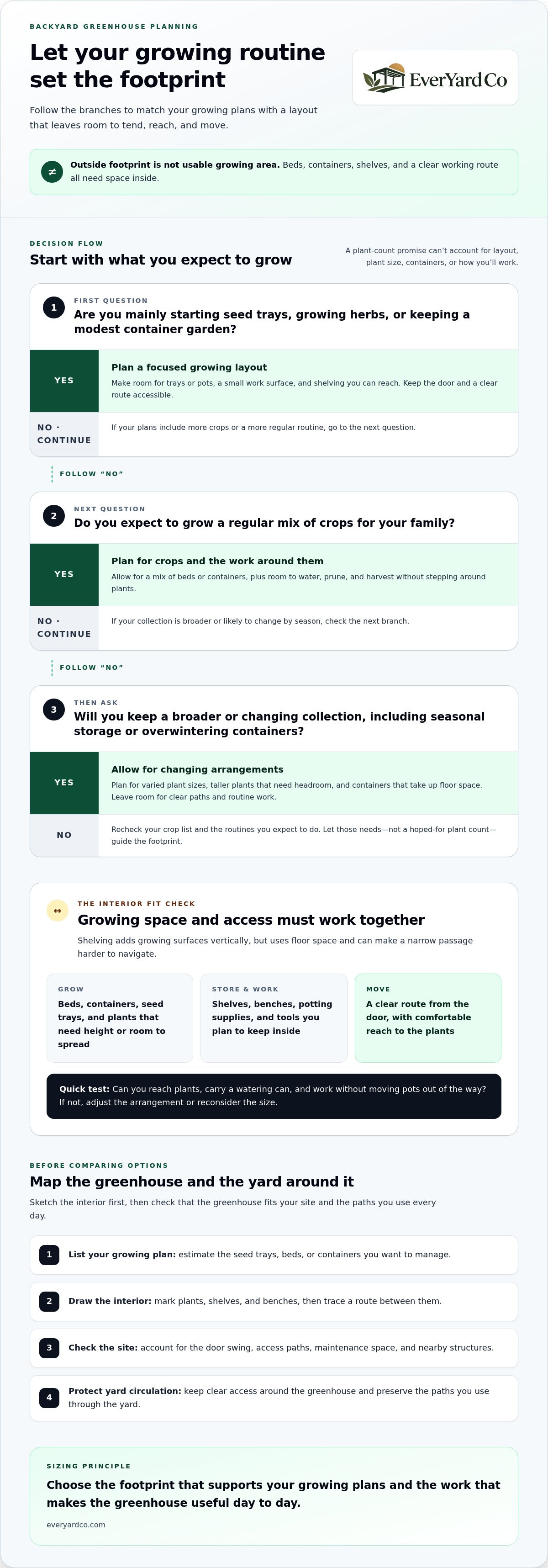
Think of the floor as a set of zones rather than one open surface. You might use some space for beds or pots, some for shelves or potting supplies, and some for a clear route from the door to the back of the greenhouse. Shelving adds growing surfaces vertically, but it also uses floor space and can make a narrow passage harder to navigate.
Before settling on dimensions, sketch the floor plan and trace how you’ll use it. Mark beds, containers, and shelves, then draw a route between them. Check that you can reach plants comfortably, carry a watering can, and work without moving pots out of the way. Growing capacity and access are connected, but they aren’t the same thing.
Start with what you want to grow
Your growing plans are a more useful starting point than a plant-count promise tied to a particular footprint. Seed starting may call for trays and reachable shelving. Seasonal vegetables may need beds or larger containers, while herbs can fit in smaller pots near a convenient work area. Taller plants need room above and around them, and overwintering containers take up floor space as well.
Before comparing greenhouse options, list what you expect to grow and how you’ll grow it. Estimate the number of seed trays, beds, or containers you want to manage. Note which plants need height or room to spread, and whether you’ll use benches or shelves. These choices affect both the open floor area and how easily you can move among plants.
Once you have a clear picture of the footprint and intended interior, dimensions are easier to assess. Choose a size that supports your growing plans while leaving room for the work that makes a greenhouse useful day to day.
How Your Gardening Plans Determine Backyard Greenhouse Size
The right greenhouse size depends on what you’ll grow and how you’ll tend it. A few seed trays need a different arrangement from a regular supply of family vegetables or a varied collection of plants. Before comparing dimensions, list your intended crops, estimate the trays, beds, or containers you’ll use, and consider whether your plans change by season. The Royal Horticultural Society’s advice on selecting a greenhouse also highlights why shape and intended use matter alongside size.
Use the table as a planning guide, not a promise of how many plants a particular footprint will hold. Greenhouse designs and interior layouts vary, and plant size, container choice, and growing method all affect capacity.
| Gardening goal | Space to plan for | Layout consideration |
|---|---|---|
| A few seed trays or herbs | Trays, pots, and a small work surface | Use shelving efficiently while keeping the door and a clear route accessible. |
| Regular family growing | A mix of crops, beds or containers, and room to tend them | Allow access for watering, pruning, and harvesting without stepping around plants. |
| A broader or changing collection | More varied plant sizes, seasonal storage, or overwintering containers | Plan for taller plants and shifting arrangements, not just the busiest growing season. |
Small greenhouse plans for focused growing
If your main aim is starting seeds, growing herbs, or keeping a modest container garden, prioritize an orderly layout over fitting in the maximum number of pots. Shelves can hold trays and smaller containers, while a clear working area makes sowing and watering easier. Leave enough room to reach each shelf and move plants as they grow. Because interior layouts differ, assess the arrangement rather than assuming that similar footprints will feel the same inside.
More room for regular or varied growing
Multiple crops, longer growing seasons, and overwintering can keep more of the interior in use at once. Tall plants need headroom and space around them; containers brought inside need a place that doesn’t block access to other crops. A potting bench, stored tools, and clear paths also take up room that could otherwise hold beds or shelves. That space is useful: it makes routine maintenance and harvesting more comfortable.
Match your greenhouse size for backyard growing to the work you realistically expect to do, not just the number of plants you hope to fit. Once you’ve mapped those needs, browse Ever Yard Co.’s backyard greenhouses with a clearer sense of what your growing routine calls for.
Compare Backyard Greenhouse Sizes by Layout and Daily Use
A compact, mid-size, or larger greenhouse can each be a good fit, depending on what you grow and how you move through the space. The greenhouse size for backyard use should support your routine without disrupting the rest of the yard. Compare interior layout as carefully as total floor area: usable width, bench placement, and door position can determine whether tending plants feels straightforward or cramped.
The categories below describe general trade-offs, not fixed dimensions or plant-capacity promises. Check any example dimensions against the specific greenhouse’s product details and interior plan.
When a compact footprint makes sense
A compact layout can suit seed trays, a few herb pots, or a modest container garden. Its smaller footprint may preserve more open yard, but it rewards careful organization. Use shelves for trays and pots, and keep the entrance and working route clear so routine tasks don’t require rearranging everything. A compact greenhouse won’t suit every growing goal, and interior room varies by design.
When to plan for more interior room
More room can make it easier to grow varied crops, add a work surface, or move among plants. But a larger footprint also changes how the yard functions. Check that it leaves clear routes to other areas and preserves the outdoor space you use every day. Choose extra area for a specific purpose, rather than assuming a bigger structure is automatically a safer choice.
Measure Your Yard and Map a Greenhouse Footprint
A greenhouse can fit within the measured dimensions of a yard and still interrupt how you use it. Before deciding on a greenhouse size for backyard gardening, map the structure alongside its entrance, working space, and the paths you already rely on. A temporary outline helps you see the impact before settling on a footprint.
- Identify a possible site. Look for an area that suits your intended use and leaves the yard’s everyday routes functional. Observe how sunlight reaches the spot at different times, and notice where water collects after rain.
- Measure the available space. Record the length and width of the potential site, including nearby structures, trees, fences, or other features that could affect placement. Measure the route you’ll use to bring plants and supplies to the greenhouse, too.
- Mark the proposed footprint. Use stakes and string, or another temporary visual guide, to outline the structure. Mark where beds, shelves, and work surfaces would go inside the outline. This makes it easier to compare the outside footprint with your intended interior layout.
- Test access and circulation. Mark the door and its swing, then walk the paths around and through the proposed space. Check whether you can reach the entrance, move supplies in and out, and access the structure for cleaning and maintenance.
Mark the footprint before settling on dimensions
Walk the full perimeter, then approach the marked area as you would during an ordinary gardening task. Try carrying a pot or watering can along the intended route. Check whether an open door blocks a path, nearby structures make access awkward, or the interior plan leaves plants difficult to reach. If movement feels constrained, adjust the outline or layout before choosing dimensions.
Account for site conditions and future access
Sunlight and drainage vary across a yard, so observe the proposed site rather than relying on a universal orientation rule. Consider nearby trees and how their shade or branches may affect the space. Leave practical access for cleaning, repairs, moving plants, and carrying supplies inside. For climate-related considerations, consult the separate greenhouse weather-resistance guide.
Before finalizing placement, check the local rules that apply to your property. Requirements can vary by location, so don’t assume that a placement accepted in one area applies elsewhere. Once you’ve considered the outline, access, and site conditions, explore Ever Yard Co.’s backyard greenhouses with a clearer sense of the footprint that will work for your yard.
Choose a Backyard Greenhouse Size That Can Grow with Your Routine
A well-sized greenhouse makes room for the gardening you actually do while fitting naturally into your yard. Bring together your growing goals, usable interior area, outdoor footprint, and everyday access before deciding. A modest plan for seed starting and herbs calls for a different balance from a regular routine with varied crops and harvesting.
Think ahead, but keep that vision grounded. If you may add a few plants or shelves, leave flexibility in the interior layout. If a much larger greenhouse would mostly sit unused, its footprint may take more from the yard than it gives to your routine. The right greenhouse size for backyard gardening supports likely needs without reserving space for a growing plan you may never follow.
A final greenhouse sizing checklist
Before browsing, revisit your plan with these points in mind:
- Confirm your growing goals. Note the crops, growing methods, and plant quantities you expect to manage, along with space for potting, storage, and other routine work.
- Recheck the marked footprint. Make sure the proposed outline leaves the entry, door clearance, paths, and surrounding yard usable.
- Picture your regular tasks. Consider how you’ll water, tend, and harvest plants, and whether you can comfortably reach beds, containers, and shelves.
- Compare actual specifications. Review the greenhouse’s listed dimensions and interior arrangement against your measurements and planned layout. Don’t assume the exterior footprint represents all the usable growing space.
From backyard measurements to greenhouse options
With your measurements and growing plan in hand, you can compare greenhouse options more confidently. Look at the structure’s dimensions alongside door placement and interior layout, then consider how it will sit within the yard’s existing paths and everyday uses. These details help distinguish a greenhouse that simply fits from one that feels purposeful.
For broader selection guidance, continue with the pillar guide, How to Choose a Backyard Greenhouse. Then explore Ever Yard Co.’s greenhouse options with your checklist nearby. A considered choice can turn underused yard space into a practical, enjoyable setting for gardening.
Make Space for the Way You Garden
The right greenhouse size for backyard gardening isn’t simply the largest footprint that fits. It’s the space that supports your growing goals while leaving room to reach plants, tend them, and move comfortably through the yard. Start with what you plan to grow, then account for shelves, work areas, entry clearance, and paths around the structure.
A marked outline helps you see how a greenhouse will sit within your yard before you choose dimensions. Compare that ground plan with the greenhouse’s listed specifications, and consider how your routine may develop. Flexibility can be useful, but extra capacity serves you best when it has a purpose.
With your measurements and priorities in hand, you can explore greenhouse options with greater clarity. Explore Ever Yard Co. greenhouse options and consider which footprint feels right for both your growing plans and your outdoor space. A thoughtful fit can make gardening a more natural part of everyday life.
Frequently Asked Questions
What is a good size for a backyard greenhouse?
A good size fits your growing plans and leaves enough room to tend plants comfortably. For seed starting or herbs, a compact layout may be sufficient; varied crops, larger containers, or regular work surfaces call for more usable interior space. Consider the greenhouse’s footprint, door placement, shelving, and paths together. The best fit supports your gardening routine without taking over the yard.
How do I calculate the greenhouse size I need?
Start by listing what you plan to grow and how you’ll grow it. Estimate the beds, containers, trays, or shelves you’ll use, then allow room for paths, watering, harvesting, and tools. Mark a proposed footprint in the yard and sketch the interior arrangement. This gives you a practical basis for choosing a greenhouse size for backyard use, rather than relying on plant-capacity claims alone.
Is a small greenhouse big enough for a backyard garden?
Yes, a small greenhouse can support a focused backyard garden, especially for seed starting, herbs, or a modest collection of containers. Its usefulness depends on how efficiently you arrange the interior and whether you can reach plants without moving things aside. Shelving can help organize trays and pots, but it also affects floor space. If you plan to grow several crops or bring plants inside seasonally, map those needs first.
Can I fit a greenhouse in a small backyard?
A greenhouse can fit in a smaller yard if its footprint and access routes work with the space. Measure the potential site, then mark the outline and door swing on the ground. Check that paths remain usable and that nearby structures, fences, or trees don’t make entry and maintenance difficult. Review applicable local placement rules before settling on a location.
What should I leave around a backyard greenhouse?
Leave enough room to open the door, reach the structure for cleaning and repairs, and move plants or supplies in and out. Keep the greenhouse from obstructing paths you use through the yard, and consider access to nearby beds or storage areas. The exact clearance depends on the design and site, so mark the footprint and surrounding routes before choosing a location.
Should I choose a larger greenhouse than I need now?
Choose extra room when you have a realistic plan to use it, such as adding shelves, growing more varied crops, or keeping containers inside seasonally. A larger greenhouse can offer flexibility, but it also occupies more yard and may leave growing or work areas unused. Consider likely changes to your routine, then balance future capacity against the space and access your yard needs today.
How do I compare greenhouse dimensions before buying?
Compare the exterior dimensions with the usable interior layout, including the position of the door, beds, shelves, and paths. Review the greenhouse specifications rather than assuming two structures with similar footprints provide the same growing room. Use a ground outline to test how each option fits your yard and everyday routes. Also consider whether the interior gives you comfortable access for watering, tending, and harvesting.


