


Greenhouse Weather Resistance: What Helps a Greenhouse Withstand the Elements
What if greenhouse weather resistance depended less on one rugged panel and more on how every part of the structure works together? Wind can strain the frame, rain can find weak joints, and snow, hail, and strong sun each place different demands on a greenhouse.
When choosing a structure, look beyond reassuring phrases to the full picture: frame, covering, roof shape, anchoring, and how doors and vents close. These details make it easier to compare product specifications with the weather your greenhouse will face.
This guide explains how wind, rain, snow, hail, and sun affect a greenhouse, and which features contribute to resilience. You’ll learn what load ratings and construction details to review, how to evaluate product information, and how placement and routine care can help protect a greenhouse over time. Understanding the whole structure can help you choose a greenhouse that makes your backyard more functional.
Key Takeaways
- Greenhouse weather resistance depends on how the frame, covering, anchoring, and openings work together, not on one material alone.
- Wind, rain, snow, hail, temperature shifts, and sun place different demands on a greenhouse.
- Compare product specifications with the conditions your greenhouse will face, rather than relying on broad descriptions.
- Review wind paths, overhead hazards, drainage, and shelter before choosing a placement, then follow installation guidance and inspect the structure over time.
- Match a greenhouse to your backyard exposure, gardening plans, and approach to upkeep for a more considered choice.
What greenhouse weather resistance means in everyday conditions
Greenhouse weather resistance is a structure’s capacity to handle routine outdoor exposure through its design, assembly, placement, and care. It isn’t a promise that the greenhouse will withstand every storm or extreme event. A structure may suit familiar seasonal conditions while still having limits in unusually severe weather.
Wind, rain, snow, hail, temperature changes, and ultraviolet exposure each test a greenhouse differently. The Greenhouse overview describes the structure’s purpose and common forms; weather performance depends on how its parts work together in the setting where it stands. A durable covering alone can’t account for frame connections, the base, installation, or exposure around the site.
Weather resistance is more than a strong covering
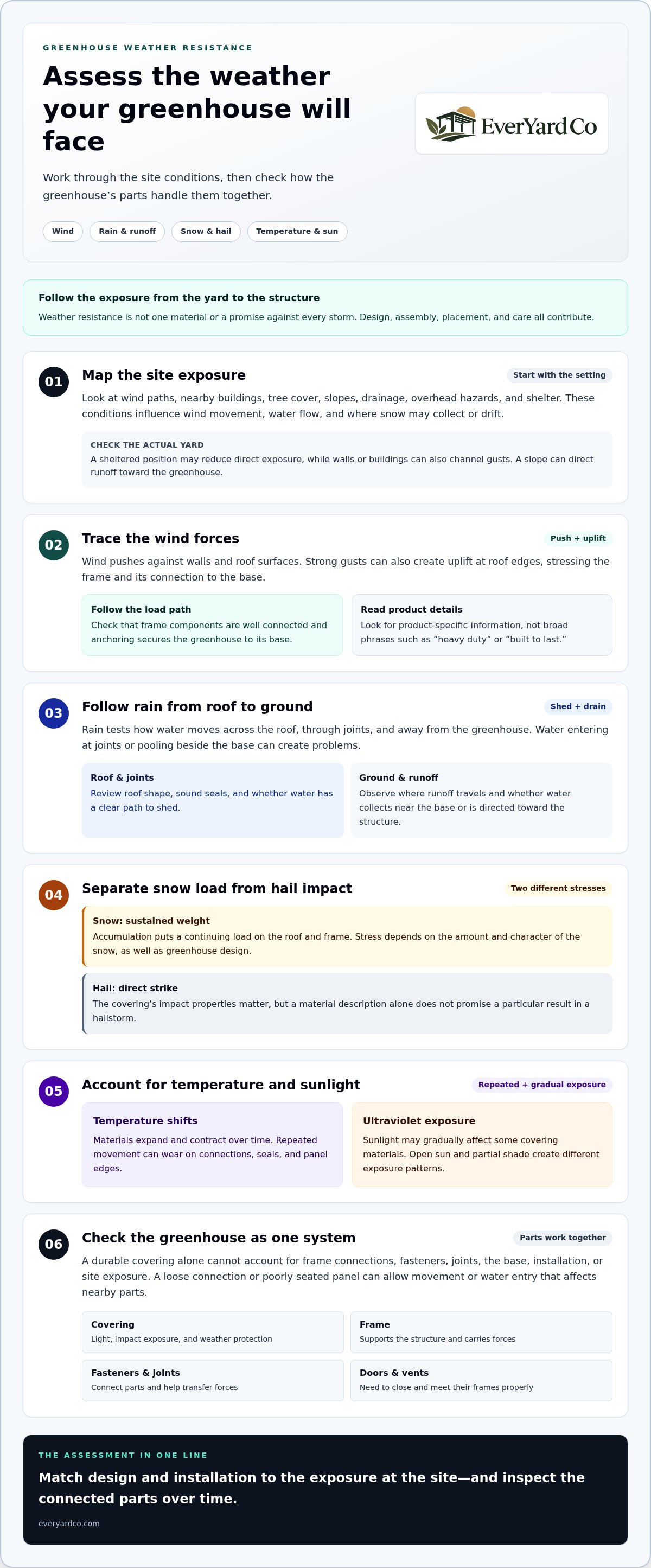
Glazing or another type of covering, the frame, fasteners, joints, doors, and base form a connected system. The covering faces impact and sunlight, while the frame carries forces across the structure. Fasteners and joints hold those parts together, and doors and vents need to close and meet their frames properly.
A loose connection or poorly seated panel can become a weak point, allowing movement or water entry that affects nearby parts. A material name alone doesn’t establish the strength or suitability of the whole greenhouse. Review the assembly as a system, and don’t treat general weather-resistance language as a guarantee against severe conditions.
Which outdoor conditions put pressure on a greenhouse?
Wind pushes against walls and roof surfaces. Strong gusts can also create uplift, a lifting force that puts pressure on the frame and its connection to the base. Rain brings a different concern: water needs a clear path away from the structure, since pooling near the base or entering at joints can cause problems.
Snow adds weight as it accumulates, while hail can strike the covering directly. Temperature swings cause materials to expand and contract, creating repeated movement at panels and connections. Sunlight, including ultraviolet exposure, can gradually affect some materials. Each stressor acts differently, so assess greenhouse weather resistance in relation to site exposure, installation, and ongoing inspection, not as a single feature.
How wind, rain, snow, hail, and sun affect greenhouse performance
Weather affects a greenhouse in different ways: some forces strike directly, some build gradually, and others work their way into weak points. The same structure can face very different demands depending on its position. An exposed yard, nearby buildings, tree cover, slopes, and drainage patterns all influence how wind moves, where water collects, and how long snow remains on a roof. Strong greenhouse weather resistance starts with understanding those conditions rather than relying on a broad label.
Wind, rain, and drainage each test different details
Wind pushes against walls and roof surfaces, while gusts can pull upward at roof edges and stress the connection between the structure and its base. Secure anchoring and well-connected frame components help transfer those forces through the greenhouse. A sheltered spot may reduce direct exposure, but surrounding walls or buildings can also channel gusts, so consider the actual wind paths through the yard.
Rain tests the route water takes across the roof and away from the greenhouse. Roof shape, sound seals, and clear drainage paths can help water shed rather than linger or enter at joints. On the ground, observe where runoff travels. Water pooling beside the base can leave the surrounding area persistently wet and complicate drainage. A slope elsewhere in the yard can also direct water toward the structure, even if the roof itself sheds rain effectively.
Snow, hail, temperature, and ultraviolet exposure
Snow accumulation creates a sustained load on the roof and frame, not just a brief impact. The stress depends on factors such as the amount and character of the snow, as well as the greenhouse’s design. Hail is different: it strikes the covering directly, so the covering’s impact properties matter. However, no material description alone promises a particular result in a hailstorm.
Temperature changes cause materials to expand and contract over time. Repeated movement can wear on connections, seals, and panel edges. Sunlight adds a slower form of exposure: ultraviolet radiation may gradually affect some covering materials. A greenhouse under open sun may experience a different pattern of exposure from one shaded for part of the day. Similarly, a roof in a sheltered yard may collect snow differently from one exposed to drifting.
Resilience depends on matching the greenhouse’s design and installation to the exposure it will actually face. Consider wind paths, rainfall and runoff, snow accumulation, hail exposure, and hours of direct sun as parts of one site picture. As you plan a functional backyard, explore Ever Yard Co. greenhouses alongside your gardening plans and the conditions around your chosen location.
How to assess greenhouse weather resistance beyond the material
A material name can help describe a greenhouse, but it can’t show how the complete structure will perform. Frame design, panel fit, connections, anchoring, and exposure all matter. To assess greenhouse weather resistance, look for clear, product-specific information that connects a component to a weather condition, rather than relying on broad phrases such as “heavy duty” or “built to last.”
Review the frame, glazing, connections, and anchoring together
The frame supports the structure, while connections and fasteners transfer forces between its parts. Glazing or other covering affects light, impact exposure, and weather protection, with different options involving different practical trade-offs. The base and anchoring matter too: visible panels alone don’t show how the greenhouse is secured or how the frame meets the ground. A greenhouse materials comparison guide can help clarify what material descriptions do and don’t tell you.
Use this checklist to connect each part with the conditions it may face:
| Component | Weather exposure | Useful specification | Follow-up question |
|---|---|---|---|
| Frame and connections | Wind and movement | Product-specific wind information and assembly details | Which connections carry the load, and how are they assembled? |
| Glazing or covering | Hail, sun, and temperature shifts | Material details and relevant impact or UV information | What exposure does the information address? |
| Roof and joints | Rain and snow | Roof configuration, panel fit, and water-shedding details | How is water directed away from seams and openings? |
| Base and anchoring | Wind and ground movement | Base requirements and anchoring instructions | What preparation and attachment does installation require? |
Read weather claims as specifications, not guarantees
Useful wind, snow, or impact information should identify the component or configuration it applies to, along with any relevant assembly or installation conditions. A rating is a product-specific claim about defined conditions, not a promise against every storm. General durability language without supporting details offers little basis for comparison.
Review the information as a whole. If a claim describes the covering but says nothing about the frame or anchoring, it addresses only part of the structure. A stated capability may also depend on correct assembly and a suitable base. Match the specifications to the exposure at your site, and treat unclear or undefined wording as a reason to compare details rather than as evidence of performance.
How placement and routine care help protect a greenhouse
Good placement and steady upkeep support greenhouse weather resistance over time. Use a simple sequence: review the site’s exposure, prepare a stable and well-drained area, follow the product’s installation instructions, inspect vulnerable details, and maintain them as directed.
Start by observing how wind moves through the yard and where rainwater flows after a storm. Note overhead branches or other hazards, nearby structures that may shelter or redirect wind, and low spots where water collects. A sheltered position can reduce some exposure, but conditions vary from yard to yard. For broader planning context, see this backyard greenhouse selection guide.
Prepare the site with weather in mind
Ground stability and drainage matter before assembly begins. Choose a location that suits the greenhouse’s base requirements and allows water to move away rather than pool nearby. Look carefully at nearby trees and buildings: branches may pose an overhead hazard, while walls can cast shade or alter wind patterns. They aren’t automatically a problem, but assess their effect on the specific site.
Consider the planned footprint alongside access, sunlight, and surrounding exposure. The greenhouse size guide for your backyard can help with this planning. Before use, follow the greenhouse’s product-specific instructions for preparing the base and securing the structure. Fit panels, seals, doors, and vents as directed instead of improvising changes that could affect how parts connect.
Inspect and maintain the details weather reaches first
Make visual checks part of routine garden care, and follow the manufacturer’s guidance for cleaning, adjustment, and maintenance. Look over fasteners and joints for signs of loosening, check glazing and seals for visible damage or gaps, and clear drainage routes when debris is obstructing them.
After notably harsh weather, look carefully for movement, displaced panels, or water entry. Address visible issues promptly, using the product’s instructions and taking appropriate safety precautions. Don’t climb onto a greenhouse or attempt repairs in unsafe conditions. Regular checks can help you spot developing problems before they interfere with your growing space.
Thoughtful placement and care help make a greenhouse a more functional part of the backyard. Explore Ever Yard Co. greenhouses as you plan a structure that suits your garden and its setting.
Choosing a weather-conscious greenhouse for your backyard
A considered choice brings together the greenhouse’s specifications, conditions at its intended site, and the way you plan to garden. Greenhouse weather resistance isn’t established by one panel, material label, or broad durability claim. Review the whole structure, then weigh its installation requirements and ongoing care against your yard’s exposure and intended use.
A concise weather-resistance checklist before choosing
Use this checklist to compare product details with the conditions your greenhouse will face. Clear, product-specific information makes it easier to distinguish relevant performance details from general marketing language.
- Review information for the frame, covering, connections, base, and anchoring as a complete assembly.
- Match stated wind, snow, or impact information to your site’s exposure, and note any assembly conditions that apply.
- Consider drainage, access for routine maintenance, and installation instructions alongside appearance and available garden space.
If a description focuses on a single material, treat it as one part of the evaluation. A greenhouse’s performance also depends on its connections, base, placement, and care. Compare like with like, and give greater weight to specific details that explain what they apply to than to undefined claims such as “all-weather” or “heavy duty.”
Turn careful planning into a more useful garden space
Think about what the greenhouse will make possible in your everyday routine, from starting plants to creating a dedicated place to grow. Then consider whether its footprint, installation needs, and maintenance fit the space and time you have. This keeps the decision grounded in both the weather the structure will face and the purpose it will serve.
Ever Yard Co. greenhouses can be part of a more functional backyard. Compare product details with your site conditions and gardening plans, and explore greenhouses from Ever Yard Co. as you shape a space for growing.
Make Room for a Greenhouse That Fits Your Backyard
A considered greenhouse choice starts with the weather your site actually faces, then connects that exposure to clear product specifications, proper installation, and regular care. No single material or feature determines how the whole structure will perform. Frame, covering, connections, base, and placement all contribute to greenhouse weather resistance.
As you compare options, keep your gardening plans in view. Think about how you’ll use the space, where it will sit, and what routine upkeep it needs. These details help turn a weather-conscious decision into a useful, welcoming part of your backyard.
Ever Yard Co. offers greenhouses for backyard use, alongside outdoor structures intended to make everyday spaces more functional and enjoyable. Explore the options and picture how a greenhouse could support your own growing routine: Explore greenhouses from Ever Yard Co.
With thoughtful planning, you can create a garden space that feels purposeful through the seasons. Start with what your yard needs, and let that guide the next step.
Frequently Asked Questions
What does weather-resistant mean for a greenhouse?
Weather-resistant means a greenhouse is designed and assembled to handle ordinary outdoor exposure, not that it’s immune to every storm or extreme. Wind, rain, snow, hail, temperature changes, and sunlight affect different parts of the structure. Greenhouse weather resistance depends on the frame, covering, connections, base, installation, site exposure, and ongoing care working together. Review specific product information to understand which conditions it addresses.
Can a greenhouse withstand strong winds?
A greenhouse may withstand wind within the limits of its design and installation, but there’s no universal answer for every model or site. Wind can press against walls and roofs, while gusts may lift at edges and strain anchoring and frame connections. Look for product-specific wind information and follow instructions for the base and anchoring. Nearby structures and the shape of the yard can also affect wind exposure.
How much snow can a greenhouse hold?
There isn’t one snow-load amount that applies to all greenhouses. Capacity depends on the structure’s design and its product-specific rating, if provided, as well as correct assembly. Snow weight also varies with its condition and accumulation. Review the manufacturer’s snow-load information and instructions for snow management. Don’t climb onto a greenhouse to clear snow; follow safe, product-specific guidance instead.
Is a greenhouse waterproof?
A greenhouse can be designed to shed rain and limit water entry, but “waterproof” shouldn’t mean that water can never enter under any conditions. Roof design, panel fit, seals, doors, vents, and drainage all influence how rain is managed. Check how the product addresses joints and openings, prepare a site where water can drain away, and inspect for gaps or damage as part of routine care.
Does greenhouse glazing affect weather resistance?
Yes. Glazing or another type of covering faces sunlight, temperature changes, and possible hail impact, so its properties are part of the weather-resistance picture. Different covering choices have practical trade-offs, and the material name alone doesn’t establish impact performance or service life. Review product-specific details, including any stated impact or ultraviolet information, and consider how the covering works with the frame, fasteners, and installation.
How can I protect a greenhouse from bad weather?
Start by choosing a well-drained location and assessing wind paths, overhead hazards, and nearby structures. Prepare the base and install the greenhouse according to its instructions, including guidance for anchoring, panels, and seals. Inspect fasteners, joints, covering, and drainage routes periodically, and look for movement or water entry after harsh weather. Address visible damage promptly and safely, following the manufacturer’s maintenance guidance.
What should I check before buying a weather-resistant greenhouse?
Review product-specific information for the frame, covering, connections, base, and anchoring, then match stated wind, snow, or impact details to your site’s exposure. Check installation requirements, drainage needs, and how the structure can be maintained. Consider your available space and gardening plans, too. No single feature establishes performance for the complete greenhouse, so compare documented details as a system rather than relying on broad durability claims.


