


Pergola for Outdoor Living: Create a More Useful Backyard in 2026
What if the patio you rarely use became a natural place to pause, share a meal, or gather at the end of the day? A pergola for outdoor living can give an open yard a clearer purpose, framing a comfortable outdoor room without closing it off from the garden and sky.
An underused patio doesn’t always need more furniture. Often, it needs a defined role. A pergola creates a visual anchor and helps establish where everyday moments can happen, from morning coffee to dinner outside. Start by identifying the activities you want to make room for, rather than planning around a structure on its own.
This guide explains what a pergola can contribute to outdoor living and how to plan its placement, comfort, and furnishings. With those choices in mind, an Ever Yard Co. pergola can help turn an overlooked area into a more useful part of home life.
Key Takeaways
- A pergola can give an overlooked patio or yard a clearer purpose by framing an open-air living area.
- Overhead coverage and open sides affect light, airflow, shade, and your connection to the garden.
- Plan a pergola area around the activities you’ll return to, such as dining, quiet breaks, conversation, or family time.
- Consider sunlight, paths, doors, views, and nearby activity areas before choosing a location.
- Set realistic expectations for shade and openness, then choose simple routines that help the area become part of everyday home life.
What Does a Pergola Add to Outdoor Living?
A pergola is an outdoor structure with upright supports and an open overhead framework. It gives an open-air living area a visible form without enclosing a patio. For a concise overview of common features and history, see What is a pergola?
A pergola changes how an area feels while keeping it connected to the outdoors. Its overhead structure can provide filtered shade, while open sides preserve airflow and views across the yard. The result is a middle ground between an uncovered patio and an enclosed room. A pergola for outdoor living can make an underused area feel intentional, even before you add furnishings.
How a Pergola Shapes an Outdoor Room
An open patio can feel like leftover space when nothing signals its purpose. A pergola’s lines frame the area overhead, helping the eye read it as a place to sit, dine, or gather. This definition can make a yard feel more organized without blocking views or movement.
Consider how the structure relates to the home, patio, and garden. An empty paved area beside a back door, for example, can become a natural transition between indoors and the garden when framed by a pergola. A chair and small table make it a spot for a morning break; a shared table turns the same footprint into a place to gather.
What a Pergola Does and Does Not Provide
A pergola frames outdoor life; it doesn’t enclose it. Its overhead framework may soften direct sunlight, but the amount and pattern of shade depend on the structure and the sun’s position. Open sides preserve airflow and views, but leave the space exposed to wind and changing outdoor conditions.
Placement also affects the experience. The home, nearby trees, and other structures can influence how much sun or shelter reaches the area. Before choosing a location, consider when you’ll use it and what conditions you’re comfortable with. A pergola can make a patio more inviting, but it isn’t a substitute for a fully covered or enclosed shelter.
That openness is part of its character. The space stays connected to the garden and changing sky, so choose a purpose that suits the conditions. A pergola can provide a defined place for everyday outdoor use without promising protection from every shift in weather. Ever Yard Co. offers pergolas to help give underused yard space a more functional role in daily life.
How Pergola Design Supports Shade, Openness, and Comfort
A pergola’s comfort depends on the balance between overhead coverage, open sides, and how you plan to use the space. Its framework can soften direct light while leaving air and views moving through the area. Because that balance differs from a solid roof or enclosed room, picture the everyday activity first, then consider how much shade and openness would suit it.
Pergola comfort depends on the relationship between shade, openness, and use. A spot for a short coffee break may work well with changing patches of light. For a long meal or an afternoon with a book, check whether the area gets shade during the hours you expect to use it. The goal isn’t to make every outdoor moment feel the same, but to understand the conditions the space will offer.
Making Sense of Filtered Shade
Filtered shade means sunlight reaches the space through openings in the overhead framework rather than being fully blocked. As the sun moves, the pattern can shift, leaving some parts of the area brighter than others. This may suit relaxed seating, an outdoor meal, or reading, but it doesn’t guarantee complete sun protection or shelter from changing weather.
The amount and character of shade depend on the structure and its setting. The direction of sunlight, nearby trees, and the home’s position can all affect how the area feels at different times. Before choosing a location, observe where the sun falls during the hours you’re most likely to be outside. A space used mainly in the morning may need a different balance than one intended for late-day gatherings.
Keeping the Space Open and Connected
Open sides preserve views across the garden and maintain a sense of airiness. Rather than creating an indoor-like room, a pergola frames the outdoors as part of the experience. You might see a planted border, lawn, or familiar path from a chair beneath the structure. That connection can make a defined seating area feel settled without making it feel closed in.
Furnishings and planting can add a sense of place without forming barriers. A dining table gives the area a clear purpose; a few chairs can create a quieter corner. Plants nearby may soften the transition between the structure and yard while keeping views open. Plan circulation, too: leave comfortable routes between the house, seating, and garden so the space is easy to enter and use.
For a pergola for outdoor living, comfort is less about shutting out the outdoors and more about shaping a setting that suits your routines. Observe light and airflow where you’re considering the structure, then picture how the space will feel during the activities that matter most. Explore Ever Yard Co. pergolas as you consider how a defined outdoor area could support daily life.
Pergola Outdoor Living Ideas: Match the Space to the Moment
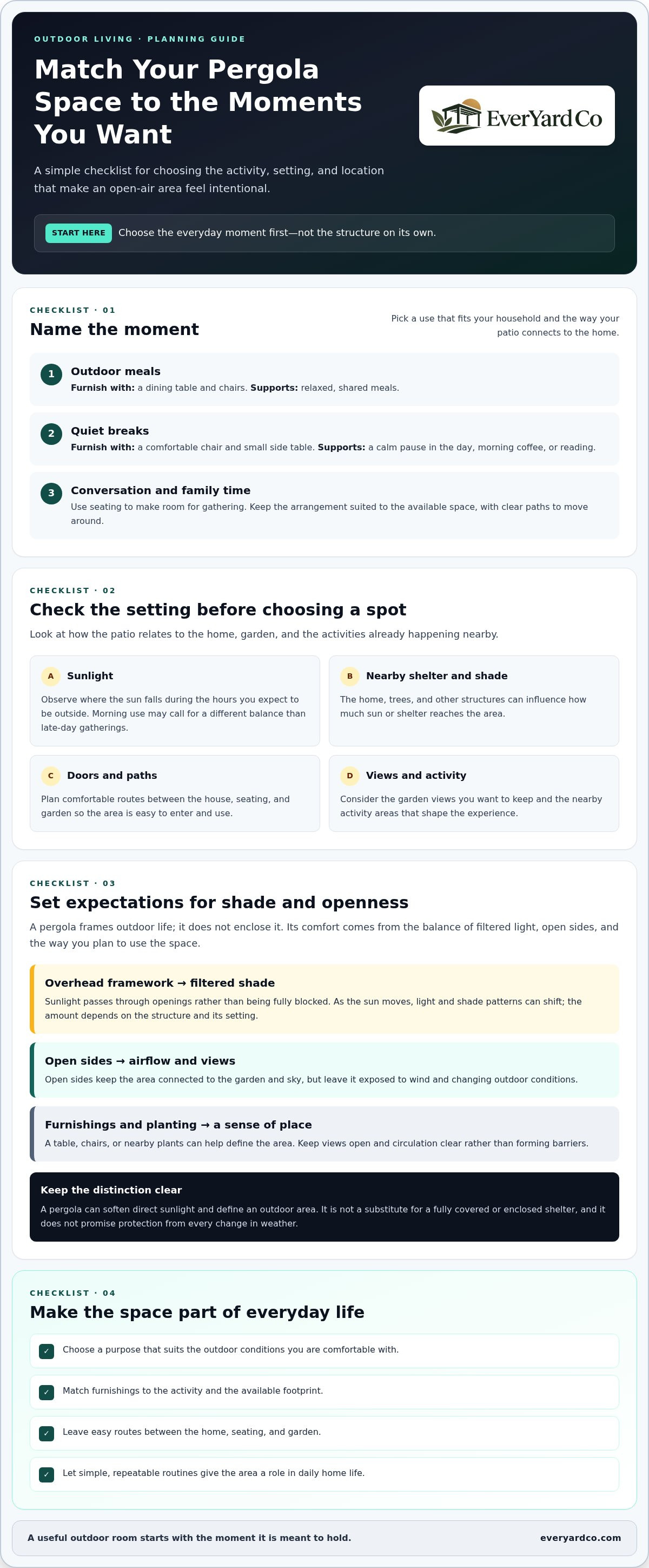
A useful pergola area begins with the moments you want to make room for. Outdoor dining needs a different arrangement than a quiet place to read, but both can work when the furnishings suit the available space and leave room to move. One area may support more than one routine during the day, though not every yard or layout can comfortably accommodate every activity.
Use these ideas as a starting point, then choose a setup that fits your household and the way your patio connects to the home.
| Activity | Useful furnishings | Feeling it supports |
|---|---|---|
| Outdoor meals | Dining table and chairs | Relaxed, shared meals |
| Quiet breaks | Comfortable chair and small side table | A calm pause in the day |
| Conversation | Chairs arranged to face one another | An easy place to catch up |
| Family time | Flexible seating with open floor space | Casual time together |
A Pergola for Meals and Conversation
For outdoor dining, make the table the center of the arrangement. Leave enough room around the chairs to pull them out and walk past without interrupting someone seated. If the pergola is near a door, keep the route between the kitchen and table direct and uncluttered. A nearby surface for serving dishes can also help keep the table clear.
Arrange seats so people can see and hear one another, rather than facing every chair outward. As daylight fades, simple lighting or practical accessories can make the area feel ready for an evening meal. Keep the layout comfortable and easy to use, not so crowded that walking through becomes awkward.
A Pergola for Quiet Time and Everyday Family Use
A smaller arrangement can support daily routines just as well. One or two chairs with a side table make a place for morning coffee, reading, or a quiet break outdoors. Choose furnishings that can be moved when needed, so the area can shift from a personal retreat to a place for conversation without becoming crowded.
For family time, leave open space alongside the seating. This gives people room to spend time together without assigning a fixed purpose to every part of the area. A flexible layout may suit a household whose routines change from day to day; a dedicated dining arrangement may be better for a patio used mainly for meals. Let the space available guide the plan.
The most inviting pergola for outdoor living is shaped around real habits, not an idealized scene. Start with the activity you’ll return to most, then add only the furnishings that support it. Ever Yard Co. pergolas can help give an underused yard area a more everyday role, with the arrangement guided by how you want to spend time outdoors.
Plan a Pergola Area That Fits Your Home and Yard
A pergola works best when its position supports the way you already move through the yard. Before choosing a location, notice where people step outside, where they naturally pause, and which paths they use to reach the garden or other outdoor areas. A pergola for outdoor living should feel connected to home life, not set apart from it.
Begin with the routine, then shape the outdoor space around it. Use this sequence to develop a practical plan:
- Choose the main purpose. Decide whether the area will primarily support meals, quiet breaks, conversation, or another regular activity.
- Observe the site. Note sunlight and exposure at the times you expect to use the space, along with nearby activity areas and views you want to preserve.
- Trace the routes. Identify the doors, paths, and transitions people will use to enter and move through the area.
- Place the furnishings. Sketch where seating or a dining table could go, allowing room to pull out chairs and walk around them.
- Review the whole layout. Consider how the structure, furnishings, home, and garden relate before settling on an arrangement.
Choose the Location by Observing Daily Use
Watch how the yard functions. Do people gather near the back door, follow a path to the garden, or pause where there’s a particular view? A location that supports those habits may feel more useful than one chosen only because it looks open. Also consider how easily you can carry a meal outside or move between the pergola and other outdoor areas.
Include sunlight in your observations. Check the proposed area at different points during the hours you’re most likely to spend outside. Notice whether nearby structures or trees change the feel of the space. This gives you a clearer picture of the setting before you settle on placement.
Bring Furniture, Movement, and Surroundings Together
Start with a simple sketch of the available area. Mark the entrance, main furniture, and routes people need to use. For a dining arrangement, allow space behind chairs for people to stand up. For a seating area, leave a clear way in rather than pushing every chair to the edge. The usable footprint includes movement, not just furniture.
Then consider the view from both the house and the yard. The pergola should sit comfortably alongside existing outdoor furnishings and relate naturally to the home and garden. An open view can make the space feel connected; a clear route from the door can make it easier to use. Ever Yard Co. offers pergolas to give underused yard areas a more purposeful role. Explore pergolas for your outdoor space as you consider how your layout could support everyday routines.
Make a Pergola Part of Everyday Outdoor Living
A pergola becomes part of home life through use, not simply by being added to the yard. Start with the routine you want to make easier, plan the area around that activity, and be realistic about its open sides and filtered shade. A comfortable setting doesn’t have to serve every purpose. It needs to work well for the moments you expect to return to.
Turn an Outdoor Idea into a Practical Plan
Write down the activities you’d most like to bring outside, such as morning coffee, sharing a meal, or sitting together at the end of the day. Then consider access from the home, sunlight during likely use, furnishings, and how the area connects to the rest of the yard. Thinking through these choices together helps create a cohesive plan rather than a collection of unrelated features.
Use your notes to make a short working plan:
- Name the regular use. Choose the routine you want to make easiest to do outdoors.
- Picture the setting. Consider how light, open-air conditions, and the relationship to the home will shape that activity.
- Keep the layout purposeful. Include the furnishings and clear routes the routine needs, leaving out additions that don’t support it.
- Imagine an ordinary day. Picture entering the area, settling in, and moving back inside. Notice anything that could make the space awkward or difficult to use.
Small habits can help the space become part of your routine. A chair positioned for a quiet break, or a table that’s easy to reach from the kitchen, can turn an occasional-use patio into a familiar part of the day. Start simply. As you use the space, you’ll learn which arrangements support your routine and which get in the way.
Keep expectations grounded, too. A pergola frames an outdoor area while leaving it open to the surrounding conditions. Its shade and shelter depend on its structure and setting, so plan for the experience you want rather than assuming it will feel like an enclosed room. That clarity helps you choose activities that suit the space.
Explore Pergolas for Your Outdoor Space
If your plan points toward a defined place to dine, pause, or gather, a pergola may be a natural next step. Ever Yard Co. offers pergolas as part of its range of outdoor living structures, helping make underused yard space more functional and enjoyable. Keep your routine and layout in mind as you explore options for your home and yard.
A thoughtful pergola for outdoor living supports everyday routines, not just special occasions. Let purpose guide the plan, and allow the space to earn its place through consistent use. Explore Ever Yard Co. pergolas as you consider a more useful outdoor setting.
Give Your Outdoor Plans a Place to Begin
A more useful backyard doesn’t have to start with a complete transformation. Begin with one routine you’d enjoy bringing outside, then let that idea guide your decisions. A pergola for outdoor living can be part of that plan, creating a setting connected to the home and suited to the way you want to spend time.
As you consider what might work, picture an ordinary day rather than a special occasion. Where would you sit? What would make stepping outside feel natural? Those details can help distinguish an appealing idea from a space you’ll genuinely return to. The aim isn’t to fill the yard, but to make room for something meaningful.
Ever Yard Co. offers pergolas alongside other outdoor living structures, with a focus on making underused yard space more functional and enjoyable. Explore Ever Yard Co. pergolas for outdoor living and find a starting point for a more useful outdoor setting.
Frequently Asked Questions
Can a pergola provide shade?
Yes, a pergola can create filtered shade, though the amount depends on its overhead structure and surroundings. If you’re planning a place for lunch, notice whether the sun reaches the table during your usual mealtime. For a seating area, check the light where you’d place a chair at the time you’d use it. Treat shade as one part of planning, not a promise of full sun protection or all-weather shelter.
What is the difference between a pergola and a gazebo?
A pergola is generally an open-sided structure with an overhead framework, while a gazebo is commonly designed as a more enclosed or roofed shelter. Their forms can vary, so focus on the experience you want. A pergola may suit you if you value a direct connection to the yard and open air. A gazebo may feel more appropriate if you prefer a sheltered setting.
Can you use a pergola for dining outdoors?
Yes, a pergola can frame a dining area and give outdoor meals a natural place in your home routine. Position the table so people can sit down and get up without blocking the route to the house. Keep frequently used serving items within easy reach, too. Since an open structure doesn’t guarantee protection from sun or weather, plan meals with outdoor conditions in mind.
How do you make a pergola more comfortable?
Start by matching the arrangement to how you’ll use it. For a pergola for outdoor living, consider where seating feels inviting, how people will move through the area, and whether the conditions suit a longer stay. Try using the space at different times before settling on an arrangement. A side table, cushions, or gentle lighting may help, but comfort comes from how the whole setting works together.
Is a pergola fully covered?
Not necessarily. Many pergolas have open sides and an open overhead framework, so they differ from enclosed rooms and fully roofed shelters. Other designs may offer different forms of overhead coverage. Because shade and protection depend on the specific structure, don’t assume every pergola will suit the same activities or conditions. Consider how exposed the space may be and what you expect to do there.
Where should a pergola be placed in a backyard?
Choose a location based on how you move through and use your yard. Consider the route from the house, doors you use often, sunlight at the times you’ll be outside, and views you’d like to keep. Nearby play or garden areas may affect the setting, too. Sketch the furniture and walking routes first; the best position depends on your property and intended use, not a universal rule.
What can you put under a pergola?
You can use the space for outdoor dining, conversation, or a quiet seating area. Let the activity guide what you add: a table and chairs for meals, or a comfortable chair and small table for reading. Leave room to pull out seats and walk through without squeezing around furniture. A pergola doesn’t need to serve several functions at once; choose an arrangement that fits the space and your household’s routines.


