


How to Choose a Pergola: A Practical Guide
The pergola that looks perfect in a photo may be the wrong one for your yard. Knowing how to choose a pergola starts with how you want to use the space, not with a style or finish that caught your eye.
It’s easy to get pulled between appearance, shade, upkeep, and fit. Each matters, but the right priorities depend on your daily routines and the conditions around your home. A pergola should feel connected to the house and yard while making outdoor time more comfortable and purposeful.
This guide will help you set clear criteria before comparing options. You’ll consider how you plan to use the space, the sun and exposure in your yard, the structure’s placement and scale, and the design details that will feel at home. With those priorities in view, you can compare options against your actual needs. Ever Yard Co. offers pergolas as part of its range of outdoor living structures, helping homeowners make more of the yard they already have.
Key Takeaways
- Start with how you’ll use the space, whether for dining, reading, gathering, or creating an easy transition from indoors.
- Assess the yard by observing sunlight and drainage, measuring the usable area, and checking access and circulation before settling on a location.
- When considering how to choose a pergola, compare open, fixed-cover, and adjustable-cover designs by their balance of shade, openness, and visual presence.
- Consider exposure to wind, rain, snow, or intense sun, along with the level of routine upkeep you’re comfortable with.
- Use the same five priorities to compare options: purpose, location, layout, design trade-offs, and upkeep.
How to choose a pergola by starting with the way you live outdoors
Start with the role you want the pergola to play, the conditions of its setting, and the feeling you want the space to create. These priorities give you a practical filter before you compare shapes, covers, or finishes. A pergola for everyday meals may need to feel different from one intended for a quiet reading corner or as an extension of the living room.
Picture a typical day, not just a gathering or celebration. Would you bring a meal outside, settle in with a book, host friends, or step from indoors into an open-air setting? Each use raises different questions about shade, openness, and exposure. A dining area may call for a clearer sense of shelter, while a reading spot might benefit from a quieter position and a more intimate feel. If you’re clarifying what the structure is, What is a Pergola? offers useful context on pergolas and how they differ from related structures.
Use, setting, and desired feel are the three starting points for choosing a pergola that belongs in your yard. Keep them in view as you explore options. They’ll help you separate essential features from details that simply look appealing.
What do you want your pergola to make possible?
Imagine an ordinary afternoon in the yard. If you picture eating outside, consider how much room you need for the table, chairs, and movement around them. For relaxing, decide whether you want an open, airy place or a more sheltered retreat. Entertaining may call for room to gather and an easy route between the house and seating area. A transition from indoors should feel connected to the rooms it extends.
Choose one primary purpose first. You can include secondary uses, such as occasional hosting in a space mainly intended for dining, but a clear main use makes comparisons easier. It also helps you decide how much shade you want, how open the structure should feel, and how exposed you’re comfortable being to the elements.
How should a pergola relate to your home?
Decide whether the pergola should feel like an extension of the house or a distinct destination in the yard. Look at the home’s proportions, rooflines, and strong visual lines, then consider how the surrounding landscape frames the space. A structure that feels too prominent can compete with the home; one that feels disconnected may not create the transition you want.
Think about the view from indoors as well as the experience beneath the structure. The alignment of nearby doors, the character of the patio, and the openness of the yard all shape how the pergola will feel in daily use. For more ideas on connecting an outdoor area to everyday routines, explore the guide to planning a pergola for outdoor living. These decisions give you a grounded starting point for comparing designs.
Assess your yard before choosing a pergola location
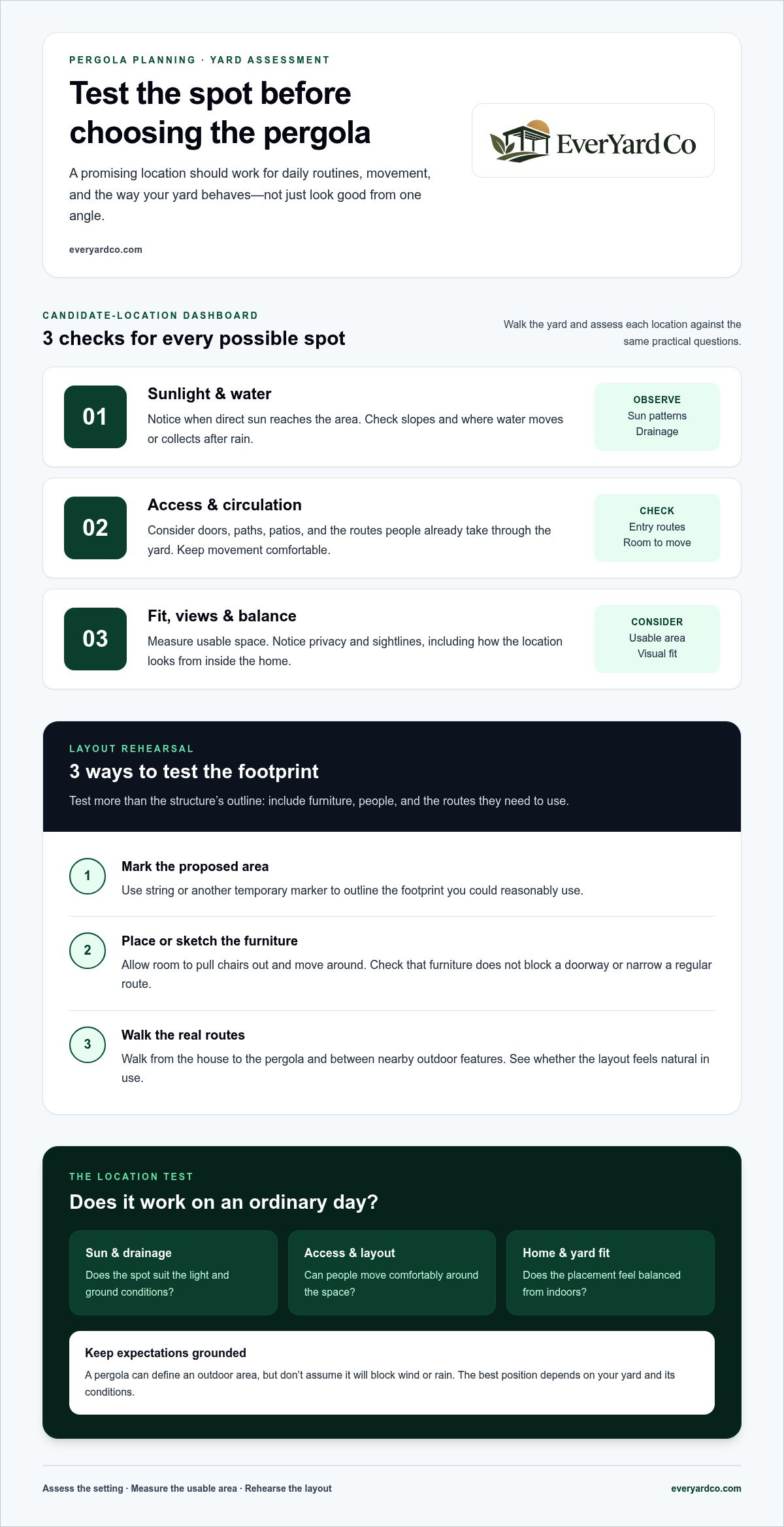
A promising spot should work on an ordinary day, not just look appealing from one angle. Before settling on a location, walk through the yard, observe how the space behaves, measure the usable area, check access, and compare possible placements. This process helps you see whether a pergola will support your intended use without disrupting the yard’s natural flow.
As you assess each location, notice how the sun moves across it, where water collects after rain, and which routes people already take between the house and outdoor areas. Doors, paths, patios, established plants, and nearby features all affect how a structure fits. A spot that seems open on paper may feel cramped once you account for movement and the view from inside the home.
A suitable location supports movement, your intended use, and the home’s visual balance. Use that test as you compare possible spots.
What should you observe in a prospective location?
Spend time in each candidate area at different points in the day. Note when it receives direct sun and whether the house, trees, or nearby structures cast shade. Look at slopes and how water moves across the ground, then consider whether existing planting or paths would be affected. Notice privacy and sightlines from the house and neighboring spaces, too. A pergola can define an outdoor area, but don’t assume it will block wind or rain.
For ideas on how pergolas can define an area and support outdoor living, Benefits and Design Ideas for Pergolas offers further context. Apply those possibilities to your own yard: the best position depends on the space and its conditions, not on an example elsewhere.
How can you test the layout before deciding?
Measure the space you could reasonably use, then sketch how it relates to doors, paths, and existing outdoor features. Don’t stop at the structure’s footprint. Include the space furniture needs and room for people to walk around it. A table may fit within the outline, for instance, but feel awkward if chairs block a doorway or narrow a regular route through the yard.
- Mark the proposed footprint with string or another temporary marker.
- Place or sketch furniture within it, leaving room to pull chairs out and move around.
- Walk the route from the house to the pergola and between nearby outdoor features.
Compare locations using the same questions: Does the placement work with the sun and drainage? Is access comfortable? Does the layout preserve established routes and feel balanced from indoors? This practical test gives you a clearer basis for how to choose a pergola that fits your setting. With a likely location in mind, explore pergola options with your yard and intended use guiding the comparison.
Compare pergola designs by their shade, openness, and visual character
Once you have a likely location in mind, compare the broad roof approach before choosing finish details. The structure overhead shapes how open the space feels, how much sky remains visible, and how directly light reaches the area. Use these design categories to weigh trade-offs. The experience of any option depends on its specific design and setting.
Use this comparison to decide what you’d like to explore further:
| Design category | Possible feel | Questions to consider |
|---|---|---|
| Open | Airy and visually light, with the sky remaining prominent | Are you comfortable with changing light and greater exposure? |
| Fixed cover | More visually defined overhead, with a stronger sense of enclosure | Does this feel of shelter suit the space and the way you’ll use it? |
| Adjustable cover | A more changeable relationship with light and openness | Would flexibility matter enough to make a more involved design worthwhile? |
How do open, fixed, and adjustable covers differ?
An open design keeps the overhead view clear and may feel less visually substantial. A fixed cover creates a consistent roofline, while an adjustable approach offers the possibility of changing the balance between openness and shade. These are broad design impressions, not guarantees of shade or weather protection. Think about the light you enjoy, the exposure you’re comfortable with, and whether simplicity or flexibility matters more.
Which visual details help a pergola complement your home?
Look at the pergola’s scale and silhouette alongside the home’s roofline, windows, and other visible architectural features. A form that feels proportionate to its setting can look intentional; one that dominates the view may compete with the house. Check the relationship from both sides: the outlook from the yard and the view through nearby doors and windows.
Consider finish and color as a separate decision. Notice the tones and lines already present in nearby paving, siding, trim, or fencing. A restrained choice can echo one of those elements without trying to match every surface. This can create visual continuity while keeping the structure distinct enough to give the outdoor area its own character.
Keep your comparisons consistent. First decide which cover category feels right, then assess scale, silhouette, and finish against the home and yard. That order makes how to choose a pergola more manageable: you’re weighing one kind of decision at a time instead of letting an attractive color distract from a roof approach that doesn’t suit the space.
Choose a pergola with long-term upkeep and outdoor conditions in mind
A pergola should suit more than the day you first use it. Consider the care you’re willing to give it and the conditions it will face in your yard. These practical questions help narrow your choices, especially if you want the space to remain useful and enjoyable through changing seasons.
Separate general weather considerations from product-specific information. Local exposure describes what a structure may face, while model-specific tested ratings provide information about how a particular pergola is assessed for those conditions. Don’t infer performance from appearance or assume every design responds to weather in the same way.
What does everyday maintenance look like?
Think about upkeep as part of your household routine. Care may involve periodic cleaning, clearing away leaves, and looking over visible components for dirt, wear, or movement. Consider whether you prefer a structure that needs only occasional attention or are comfortable setting aside time for more regular care. Exact tasks and intervals depend on the specific product, so follow its guidance rather than relying on general assumptions about a material or style.
A simple question can clarify your preference: will routine checks feel manageable, or are you more likely to put them off? Choose with the answer in mind. A low-effort routine you can sustain is more useful than an ideal maintenance plan that doesn’t fit daily life.
How should local outdoor conditions inform your choice?
Look beyond the forecast on a pleasant afternoon. Make a short list of the conditions your intended location experiences, then compare them with the specifications for the pergola you’re considering. Both the site and the structure matter; a general description of local weather can’t establish how a particular model will perform.
- Prevailing wind and whether the spot is exposed or sheltered
- Rainfall, water movement, and areas where moisture tends to collect
- Strong or prolonged sun across different parts of the day
- Snow, seasonal temperature changes, or other conditions typical of your area
Use the list to guide your review of product information, not to make assumptions. If wind or snow is a concern, look for the relevant model-specific ratings and guidance. A pergola’s design, placement, and exposure all influence the decision, so avoid treating any single weather condition as a universal measure of suitability.
Before selecting or placing a structure, check the current building requirements that apply in your area. Local rules may affect where a pergola can go or what approvals are needed. Confirm the requirements for your location before finalizing the plan, and consider them alongside your intended use and yard layout.
Weighing care, exposure, and local requirements makes how to choose a pergola a more grounded decision. Ever Yard Co. offers pergolas for homeowners looking to make their outdoor spaces more useful and enjoyable.
Use this pergola checklist to make a confident final choice
You’ve considered how you’ll use the space, where a pergola could sit, and which design and upkeep trade-offs feel right. Now bring those decisions together in a short checklist. Applying the same priorities to every option makes comparisons clearer and helps keep an appealing extra from overshadowing a genuine need.
What should your pergola shortlist include?
Write down your primary use, preferred location, measured footprint, and desired level of shade. Add the visual qualities you’re drawn to, along with practical considerations such as exposure and the maintenance routine you can sustain. Then sort each note into an essential need or an attractive extra. This distinction helps you compare options consistently instead of changing your criteria for each one.
Use these five steps to review your shortlist:
- Purpose: Name the main activity the pergola should support. Keep occasional uses secondary unless they change what the space needs.
- Location: Identify the preferred area and note what makes it suitable, including access, sunlight, drainage, and its relationship to the home.
- Layout: Record the usable footprint, furniture needs, and walking space. Check that the arrangement still works with nearby doors and paths.
- Design trade-offs: Compare openness, shade, and visual presence. Note which qualities matter most and which compromises you’re comfortable making.
- Upkeep: Consider the care you’re prepared to give the structure, along with the outdoor conditions it will face. Use product-specific guidance for details.
Keep this list beside you as you review each option. If one choice looks appealing but misses a central priority, give that difference weight. If two options meet your needs, use secondary preferences to distinguish between them. The goal isn’t to find a structure with the longest feature list; it’s to choose one that makes sense for your space and the way you want to live in it.
How can Ever Yard Co. fit into your next step?
With your priorities in hand, browsing pergolas becomes a more focused exercise. Ever Yard Co. offers pergolas for homeowners looking to make their outdoor space more useful and enjoyable. Use your checklist to connect the options you see with your intended routine, available space, and preferred feel.
Explore pergolas from Ever Yard Co.
A well-chosen pergola doesn’t need to answer every possible need. It should fit the yard, feel at home beside the house, and support the moments you want to spend outdoors. Let that sense of fit guide your final choice.
Make room for more time outdoors
A well-chosen pergola can change how a yard feels to use, turning an overlooked corner into a place you naturally return to. As you decide how to choose a pergola, picture the everyday moments you’d like to make easier: a meal outside, a quiet pause, or a comfortable place to gather. Let that picture guide your final choice more than a long list of features.
With your priorities clear, you can explore options at a calmer pace and imagine how each might fit your home and daily routine. Ever Yard Co. offers pergolas as part of its outdoor living range, with a focus on helping homeowners make more of underused yard space. The right fit is the one that feels at home and gives the space a purpose you’ll enjoy.
Explore pergolas from Ever Yard Co.
Take the next step with confidence. A thoughtful choice can make outdoor living feel less like an occasional plan and more like a natural part of home.
Frequently Asked Questions
Do I need a permit to build a pergola?
You may need a permit, depending on local rules and the details of the project. Requirements can vary with factors such as the structure’s size, placement, and whether it connects to the house. Homeowners association guidelines may also apply. Before purchasing or building, check current requirements with your local building department and review any community rules so the location and structure meet applicable requirements.
Can a pergola be placed over an existing patio or deck?
Yes, a pergola may be placed over an existing patio or deck if the surface and anchoring points suit the structure. Don’t assume that a patio slab or elevated deck can support posts simply because it appears solid. Consider its condition, construction, and the pergola’s attachment requirements. For a deck, pay particular attention to how the posts can be anchored to the supporting structure, not just the surface boards.
Should a pergola be attached to the house or freestanding?
Choose an attached or freestanding pergola based on the layout you want and the structure’s requirements. An attached option can create a direct transition from a doorway or living area, while a freestanding one can define a separate spot elsewhere in the yard. For an attached design, consider how the connection relates to the house structure. Compare both arrangements with your routine, available space, and preferred relationship to the home.
Can a pergola be used in winter?
A pergola may remain useful in winter, but its comfort and suitability depend on its design and local conditions. An open structure won’t enclose the space or, by itself, make it warm. Consider wind exposure, ice, and the possibility of snow accumulation, then use the product’s guidance for relevant limits and seasonal care. Outdoor furniture and accessories may also need attention or storage as conditions change.
Does a pergola add value to a home?
A pergola can make outdoor space more usable and appealing, but it doesn’t guarantee a particular increase in resale value. Its contribution depends on how well it fits the home, the yard, and potential buyers’ expectations. A thoughtfully placed structure that feels cohesive and is cared for may strengthen the impression of a functional outdoor area. Consider everyday enjoyment first, with resale appeal as a possible added benefit.
How do I decide whether I need a cover for my pergola?
Decide based on the balance of light, openness, and shelter you want during the hours you’ll use the space. If you enjoy an unobstructed view overhead, an open design may suit you; if direct sun makes a seating area uncomfortable, explore cover options. To choose a pergola cover, think about a specific routine, such as afternoon meals, and compare how each approach could affect that experience.


